Starting a business is always exciting, but can also be scary at the same time. Picking the right structure legal structure for your venture is one of the many steps to launching your business. For new business owners in the United States, creating a Limited Liability Company (LLC) is one of the most sought after options.
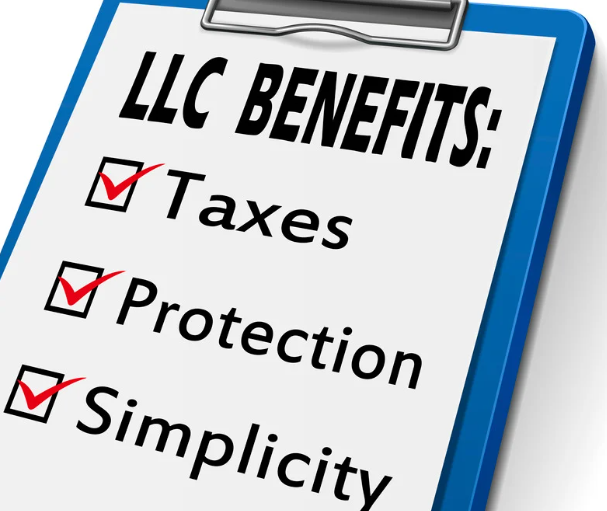
LLC’s offer personal liability protection and simultaneously allow flexibility to the members, which makes them suitable for various businesses.
In this detailed overview we will discuss everything there is to know about an LLC—its different types, uses, legal considerations, and the most efficient means of forming one.
Particularly, we will point out the ways Bizstartz can aid international founders in streamlining the bureaucratic processes.
What is an LLC?
An LLC, or limited liability company, is a legal form of a business entitled in all 50 states in America that provides personal liability protection for its owners (members).
An LLC provides personal liability protection like a corporation while also being easy to manage and incredibly tax favorable like sole-proprietorships or partnerships.
Traditional corporations have far more rigid guidelines set regarding the operation of businesses; for instance corporations must hold numerous meetings within a year and issue stock. Moreover, LLC members aren’t bound to business debt or lawsuits.
LLCs are great for solo entrepreneurs, partnerships, real estate investors, eCommerce brands, and international founders looking to penetrate the US market.
Key Advantages:
- Limited Personal Liability
- Simple Setup and Maintenance
- Pass-Through Taxation
- Flexible Ownership and Management
- Credibility with Banks and Clients
Types of Limited Liability Companies (LLCs)
When Setting up an LLC, it is advisable to pick one which best suits your intended purpose and level of governance, along with the laws of the country. Below is a detailed description of the different kinds of LLCs that exist in the US.
1. Single Member LLC
Just like the name suggests, a Single Member LLC is owned and operated by one person or entity. It has the same level of lawsuit protection multi-member LLCs offer, hence is a favourable option for independent contractors and self employed businessmen.
Main Characteristics:
- Owned by a single individual or entity
- No Double Taxation as income is paid at the time of personal filing
- Minimalistic in setting up and governance
- Not being personally liable in a court of law for the debts of the company
2. Multi-Member LLC
Allowable to (2) owners associates called members. A Multi Member LLC Is A business Mutually Owned Call By (One) or More Persons (Members.) A Multi-Member LLC caters two or more members. It however allows flexibility in the management and division of profits. This arrangement also allows for more creativity in the operating agreement, but requires more restriction to avoid abuse of shared ownership.
Main Features:
- Owned by two or more members
- Pass-through taxation (Every member reports their portion from individual tax returns)
- Roles and responsibilities as well as profit sharing are defined in the operating agreement
- Provides liability protection to all members
3. Member Managed LLC
In Member Managed LLC, all members participate in the operational aspects of the business. Most states have this as a default management structure and it is preferable for companies where the owners want to take part in the business.
Key Features:
- Each member can make business decisions and has full authority.
- Other members can make decisions on behalf of other members (collective or majority-based decision-making).
- Good for small, mid-sized businesses and active owners.
4. Manager Managed LLC
In a Manager Managed LLC, the day-to-day activities are performed by one or more managers who are not members. This structure is often selected by members who wish to be only passive investors.
Key Features:
- Management of the business is done by specific managers who may or may not be members.
- Limited involvement for non-managing members.
- Larger businesses or those with silent partners would benefit more.
5. Series LLC
A Series LLC enables one parent LLC to form several independent subdivisions (known as series) which have separate assets, liabilities, and members for each. This is suitable for businesses with several ventures or assets.
Key Features:
- Multiple series under one legal entity
- Each series has separate liability protection
- Often used by real estate investors or businesses with diverse operations
- Not available in all states
6. Professional LLC (PLLC)
A Professional Limited Liability Company (PLLC) is tailored for licensed professionals like medical doctors, lawyers, engineers, and certified public accountants. Certain jurisdictions impose a PLLC on some licensed professionals instead of a standard LLC.
Key Features:
- Must be owned by licensed professionals
- Provides liability protection for business debts but not for professional malpractice
- Subject to additional state regulations and licensing board rules
7. L3C (Low-Profit Limited Liability Company)
The L3C is a hybrid business type. It merges the legal and tax flexibility of an LLC with a non-profit’s social purpose, catering to businesses that have a limited profit goal but prioritize social impact.
KEY FEATURES
- Function for social or charitable purposes as the primary mission
- Profits can be limited
- Appeals to foundations and philanthropic investors
- Only recognized by some states
What are LLCs used for?
Meaning “limited liability company” an LLC is extremely flexible and serves a wide variety of business purposed:
1. Initiating a Business
An LLC structure is beneficial for new eCommerce stores, mobile apps or consultancies, as it offers legal protection and tax advantages.
2. Real Estate Investments
Rental properties are often owned by real estate investors through LLCs as this protects personal assets from property-related liabilities and simplifies tax reporting.
3. Freelancers and Independent Contractors
LLCs can help asset protection and image projection for designers, developers, consultants and other professionals.
4. Online Operators
Digital businesses, including dropshipping, affiliate marketing or SaaS platforms, find LLCs especially useful due to the flexibility and protection offered during transactions with US clients.
5. Family owned businesses
Operating an LLC enables shared ownership and effortless transfer of interests among family members while sustaining operational flexibility.
6. Partnerships and Joint Ventures
Businesses or individuals who come together for a common goal can use an LLC to formalize the agreement, outline the roles of each party involved, and ensure protection of everyone’s interests.
7. Foreign Ownership
LLCs suit foreign entrepreneurs looking to penetrate the U.S. market. An LLC can be owned by anyone, not necessarily a U.S. citizen or a resident.
LLC Legal Considerations
Although maintaining an LLC is less complex than a corporation, important legal considerations still apply:
1. Operating Agreement
Even if not required by your state, this document is critical. It sets the terms for the structure, roles, responsibilities, profits, division of disputes, and other pertinent elements. It serves to mitigate legal and operational ambiguities among members.
2. State Specific Regulations
Different states have unique requirements concerning naming, incorporation fees, title reporting, franchise taxation, and compliance. For example, the state of California has a minimum franchise tax of $800 while Wyoming does not impose a state income tax.
3. Registered Agent
Every LLC must designate a registered agent, a person or agency who resides in the state of registration. The agent’s responsibility is to receive legal correspondence on behalf of the business. Bizstartz serves as registered agent to all 50 states.
4. Separation of Finances
Blending private and business finances may enable “piercing the corporate veil,” exposing your private assets to certain liabilities. Always keep a business bank account, maintain accurate records, and bookkeeping.
5. Annual Filings and Reports
Every state seems to want their little piece of the action with regard to an annual or biannual report, and the collection of modest fees. Not complying with payments may incur penalties or even cancel the business registration.
6. BOI (Beneficial Ownership Information) Reporting
Beginning 2024, the Corporate Transparency Act requires BOI Reporting for most U.S. LLCs as the CTC must report to FinCEN detailing who controls or owns the company. Not submitting this will attract significant penalties.
How to Form an LLC: A Step-by-Step Guide
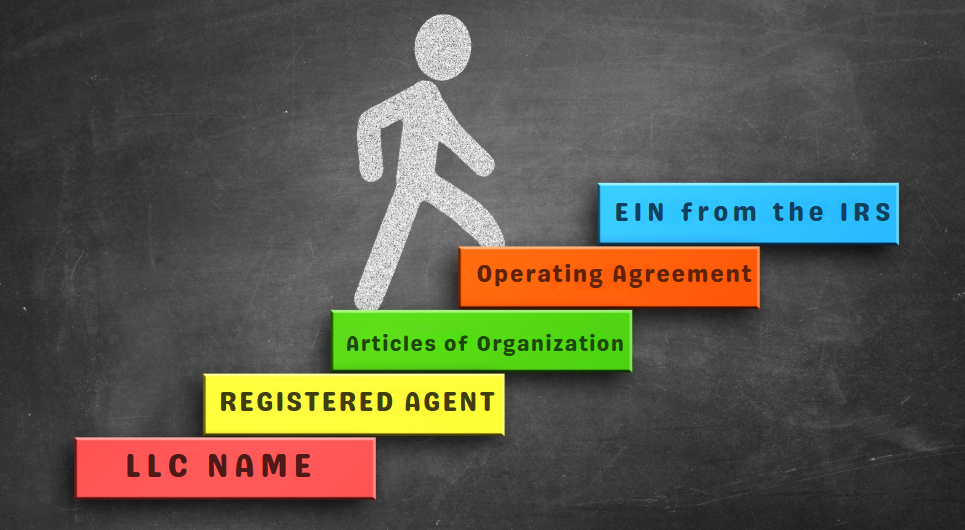
Starting a Limited Liability Company (LLC) can be extremely beneficial for any entrepreneur seeking legal shielding, tax adaptability, and business standing. Thus, in the following paragraphs we will provide a relevant, step-by-step guide on how to form an LLC.
Step 1: Choose a Unique and Compliant LLC Name.
Your business name is its first impression and thus, the basis of your brand identity. Your name needs to be marketable and compliant legally.
✅ Tips for Choosing Your LLC Name:
- Uniqueness: ensure that the name is not used in your states listing of registered businesses.
- Compliance: The words “Limited Liability Company” or abridged as LLC or L.L.C should be mandatory inclusions.
- Domain Availability: The corresponding website and social media page should not have been claimed by someone else.
- Restricted Wording: Words like Bank, Insurance or Attorney should be avoided unless licensed.
🔍 How to Check Name Availability with The State’s Secretary:
Check for your states Secretary of State’s business search feature. Most states offer this for free.
Step 2: Appoint a registered agent
Each and every American state requires the appointment of a registered agent. A Registered Agent is any person or company responsible for receiving government and legal postal documents for your LLC.
✅ Registered Agent Options:
- Individuals: You, a business colleague, or anyone within the states address.
- Commercial Legal Service: A registered agent service will be beneficial in matters of privacy, reliability, and compliance.
Professional services also maintain completely accurate records, and your home address will never appear in public records.
Step 3: Submit the Articles of Organization
The document that formally establishes your LLC is referred to as the Articles of Organization (or Certificate of Formation).
General Information Needed:
- Your LLC name
- Business office address
- Registered agent contact information
- Duration (Usually perpetual unless indicated otherwise)
- Management structure(member-managed or manager-managed)
- Business purpose (general or specific.)
Papers need to be submitted to the Secretary of State or a similar governing body of the state. Most states allow electronic submissions.
Step 4: Prepare the Operating Agreement
An operating agreement isn’t compulsory under the law, but it is important for identifying and detail within which an LLC is splits, particularly in case of multiple owners.
🧾 What to Include:
- Ownership structure and member contributions
- Profit/loss allocation
- Voting rights and decision-making rules
- Member roles and responsibilities
- Procedures for adding/removing members
- Steps for dissolution or exit strategies
Single member LLCs still manage better operational efficiency and reinforced separation by having a distinct designated owner.
Step 5: Acquire an EIN from the IRS
An Employer Identification Number (EIN) serves as your LLC’s federal tax ID. It is necessary for opening a bank account, hiring staff, and filing taxes.
📝 Where to Apply for an EIN:
- Online (recommended): You may get it for free on the IRS’s website and it will be issued immediately.
- By Mail or Fax: Send IRS Form SS-4.
🌍 Non-US citizens may also use form SS-4 to receive it via mail or over the phone.
Step 6: Maintain Local, State & Federal Compliance
Your LLC faces a multitude of compliance ongoing legal activities.
📌 Business Licenses & Permits:
- This could involve local business licenses, zoning permits, sales tax registration, or permits specific to the industry.
- Permits vary by state, city and even county.
📋 Franchise Taxes and Annual Reports:
- The majority of states require LLCs to pay franchise tax during the fiscal year and submit monthly or quarterly tax returns.
- Failure to meet financial threshold may lead to bankruptcy or even be forced out of business.
💼 Taxes:
- Default taxation: Single member LLCs (called sole proprietorship) or multi-member LLC (partnership).
- Optional election: S-Corp or C-Corp for additional possible tax advantage (must submit Form 2553 or 8832 with the IRS).
- It is important to speak to a CPA for optimizing tax arrangement.
Step 7: Set Up a Company Bank Account
Separating personal and business financial accounts helps protect your limited liability status while easing the accounting burden.
🏦 Necessary Documentation:
- Confirmation Letter of the Employer Identification Number (EIN)
- Articles of Organization
- Operating Agreement, particularly for Multi-Member LLCs
- Banking Resolution (if not included in the Operating Agreement, some banks might require this).
💡 Tips: Look for banks that work specifically with small businesses as well as those that have connections with QuickBooks or Xero.
How BizStartz Can Assist With Forming An LLC In The USA
BizStartz assists entrepreneurs globally in forming and operating LLCs completely remotely in the USA. So whether you are a digital nomad, freelancer or an international investor, we help you with compliance matters with ease.
Included Within These Services:
✅ Form An LLC In Any State
✅ EIN Application (SSN/ITIN Not Required)
✅ Registered Agent Services
✅ BOI Filing
✅ ITIN Application Services
✅ Open Business Bank Account (Remote Available)
✅ Annual Compliance & Bookkeeping
✅ Ongoing Business Support
What Makes Bizstartz Stand Out?
- We handle the entire process from start to finish
- Transparent pricing with no hidden fees
- Fast turnaround, get your LLC in 24–48 hours
- Multilingual support and international expertise
🎯 Get Started Today: Start Your LLC with Bizstartz
Final Thoughts
The LLC is an optimal and protective framework for businesses, regardless of scale. The popularity of LLCs in the United States is apparent due to their ease of setup, significant tax benefits, and robust liability protections offered with minimal bureaucracy.
Whether starting your business or restructuring one, an LLC is a smart starting decision, especially when working with professionals like Bizstartz that expedite compliance services.
Frequently Asked Questions (FAQs)
1. Are non citizens allowed to own an LLC in the United States?
Absolutely. A non-resident can completely own and operate a US based LLC. There are no requirements for citizenship or residency at any point.
2. Am I required to live in the U.S. or provide a physical address?
Not at all. You only require a registered agent in the specific state of your formation, which Bizstartz offers.
3. How long does it take to form an LLC?
In most cases, between 1 and 5 business days based on the state. Bizstartz does most of these within 24 to 48 hours.
4. Is it possible to get an EIN without an SSN or ITIN?
Absolutely. Bizstartz works with international clients in obtaining EINs even in cases where there is no SSN or ITIN provided.
5. What is BOI reporting, and is it mandatory?
Most LLCs created after January 1, 2024, will be subject to BOI (Beneficial Ownership Information) reporting. Bizstartz is able to do this filing so you can maintain compliance.
6. Which state is best for forming an LLC?
Your objectives will dictate this. If it’s for privacy or tax purposes, Delaware, Wyoming, and Nevada are the most popular. Bizstartz will assist in deciding which state is best for you.
7. What happens if I don’t maintain compliance?
Not filing the required reports or paying the necessary fees may bring along various consequences such as losing liability protection or your LLC being dissolved. As an example, compliance tracking and annual support are services provided by Bizstartz to keep you on track.