Annual Tax Filing for Florida LLC Owners

The Most Detailed Guide for the Founders, US and Overseas, on Opening and Managing LLCs in Florida
Florida is one of the top US States for Entrepreneurs, Investors, Creators, eCommerce sellers and Founders from other countries. Since Florida has no state personal income tax, a low regulatory burden, and a booming ecosystem for business, the state of Florida receives thousands of LLC formations annually.
But LLC formation is just the beginning.
In order for your Florida LLC to remain active, compliant, and in good standing, there are a number of other LLC requirements you must comply with on an annual basis, at the state level (Florida) and federal level (IRS). If you fall short on meeting the requirements, you may face:
  • Hefty fees
  • Penalties from the IRS
  • Loss of your protective business shell
  • Closure of your LLC
  • Difficulties in opening a business bank account or getting a payment processor
This guide covers in detail for every Florida LLC owner (foreign, US and other) the tax and other compliance requirements in the state where the LLC is formed. Because the owner is a foreign national, there are some unique requirements and a difference in the compliance rules we will focus on the Foreign owner of the LLC formation.

1. Understanding How Florida Taxes LLCs: A Complete Overview

Before diving into the annual filing requirements, it’s important to understand how LLCs are taxed in Florida, because there is often confusion among new entrepreneurs.

No Personal State Income Tax:

When it comes to income tax, Florida state tax for individuals is non-existent. This is a great perk for owners of LLCs as the income that is passed through the LLC is also non state income tax.

Who gets to take advantage of this?

  • Single-member LLC owners
  • Multi-member LLC owners
  • Non-U.S. Residents who have Florida LLCs
  • S-Corp owners (only federally)
This standpoint fully explains why Florida is a perfect place to be for a digital business. This stands true for eCommerce sellers, consultants, content creators, and entrepreneurs from all over the world.

2. Does Florida LLC Pay State Corporate Income Tax?

Only certain LLCs must pay Florida Corporate Income Tax, specifically:

A. LLCs Taxed As C Corporations

If your LLC elects to be taxed as a C Corporation, it is treated as a corporation for tax purposes.
Tax Rate: Currently at a flat 5.5% corporate income tax
Filing Required: Florida Form F-1120

B. LLCs with federal corporate taxation

If your LLC does file IRS Form 1120, you also must file Florida Form F-1120, unless you fall under the exempt bill.

Example Scenario

A foreign founder with a software company that has a C-Corp has to consider the following tax obligations for their Florida LLC:
  • Federal tax obligations on corporate income: 21%
  • Florida corporate tax obligations: 5.5%
  • If international profit distribution occurs, a dividend withholding tax applies to foreign dividends.
Most entrepreneurs located outside of the United States do not choose the C-Corp tax option because it is unnecessary unless there is a need for a specific startup structure or for the investors involved.

3. Mandatory Florida Annual Report: A Detailed Breakdown

Every Florida LLC MUST file an annual report each year regardless of:
  • Whether the LLC operated or not
  • Whether the LLC owner is a U.S. or a non-U.S. resident
  • Whether the LLC generated revenue

Purpose of Filling an Annual Report

It is to update changes made to the LLC with the Florida Secretary of State:
  • Principal office address
  • Mailing address
  • Members/managers
  • Registered agent
  • EIN (optional but recommended)
  • Business activity code (NAICS)
Florida utilizes the annual report for the purpose of confirming the LLC is active and maintains a position of “good standing” with the company.

Annual Report Filing Fee

  • $138.75

Deadline

  • Every year by May 1
What Happens; Penalty For Not Filing Reports

Penalty for Missing the Deadline

  • $400 late fee — automatically added
  • No exceptions or waivers
  • If not filed, the LLC is dissolved in September

If Your LLC Is Dissolved

If you wish to reinstate the LLC, you will need to pay:
  • Reinstatement Fee: ~$100
  • Past due annual report fees
  • Late Penalty Fees
Bizstartz assists clients with the filing of reinstatement and the corrections of non-compliance issues.

4. Federal IRS Filing Requirements for Florida LLCs

Federal filing requirements are based on several criteria, such as:
  • The number of owners
  • The members’ nationality: are they U.S. citizens or foreign nationals?
  • Tax election status of the LLC
  • Existence of U.S.-sourced income
This will be explained in detail below.

5. Florida LLC Federal Tax Filing: U.S. Owner vs. Non-U.S. Owner

Case A: Florida LLC Owned by U.S. Residents

1. Single-Member LLC (U.S. Owner)

Default IRS classification: Disregarded Entity

Required Filing:

Form Description
Form 1040 + Schedule C Reports business income and deductions
Schedule SE Self-employment tax (if applicable)

Common Situations:

  • Freelancers
  • Consultants
  • Digital product sellers
  • Amazon/Etsy sellers
  • Online service providers

Why this is simple:

The LLC does not file a separate return. The owner files everything in their personal tax return.

2. Multi-Member LLC (U.S. Owners)

Default classification: Partnership

Required Federal Filings:

Form Description
Form 1065 Partnership tax return
K-1 for each member Shows each member’s share of income

This filing is ALWAYS required even if your LLC earned $0.

3. LLC Electing S-Corporation Taxation

Many U.S. owners choose S-Corp status for reducing self-employment taxes.

Required Filings:

  • Form 1120-S
  • K-1 for each shareholder
  • Quarterly payroll filings if taking salary

4. LLC Electing C-Corporation Taxation

Must file:

  • Form 1120
  • Must also file Florida Form F-1120 (corporate tax)

6. Florida LLC Federal Tax Filing for NON-U.S. OWNERS (Detailed Guide)

This is the most important section for Bizstartz clients since the majority are non-U.S. entrepreneurs.

If you are a non-U.S. founder, your Florida LLC is subject to special IRS rules.

Let’s break it down.

A. Foreign-Owned Single-Member LLC (MOST COMMON STRUCTURE)

If you are a non-U.S. person and you form a single-member LLC in Florida:

The IRS treats your company as a foreign-owned disregarded entity (FDE).

Required IRS Filings:

Form Purpose
Form 5472 Discloses foreign ownership & transactions
Pro forma Form 1120 Filed with Form 5472
FBAR (if applicable) If the owner has foreign accounts >$10,000

Deadline

  • April 15
  • Can be extended to October 15 using Form 7004

Penalty

  • $25,000 minimum for failing to file
  • Additional $25,000 for continued non-filing

Examples of “reportable transactions”:

  • Owner invested money into the LLC
  • LLC paid the owner
  • Owner loaned money to the LLC
  • LLC paid expenses on behalf of owner

Even zero-revenue LLCs must file Form 5472.

Most non-U.S. business founders mistakenly assume they don’t need to file because the LLC made no money, this is incorrect and risky.

Bizstartz handles Form 5472 filing for foreign owners.

B. Foreign-Owned Multi-Member Florida LLC

If your LLC has more than one non-U.S. owner, it is treated as a foreign partnership unless another election is made.

Required Filings:

Form Purpose
Form 1065 Partnership tax return
K-1 for each member Allocates income
Form 8804/8805 Withholding tax on foreign partners
ITIN application Required for foreign owners

Withholding Tax Rule:

Foreign partners are subject to withholding on effectively connected income (ECI) — typically 21% or 37% depending on circumstances.

If LLC earned U.S.-sourced income, this filing is mandatory.

C. Foreign-Owned LLC Electing C-Corporation

If a foreign founder elects C-Corp taxation:

Required filings:

  • Form 1120
  • Florida Form F-1120
  • 30% withholding on U.S. dividends

This structure is commonly used for:

  • Venture-backed startups
  • Businesses planning to raise equity
  • Delaware flip structures

But rarely recommended for eCommerce or service businesses unless strategic.

7. Sales Tax Compliance for Florida LLCs (Complete Guide)

UK Limited Company Compliance Requirements

Florida imposes state sales tax if your business sells:

  • Physical products delivered within Florida
  • Some digital goods
  • Certain services

State Tax Rate

  • 6% base rate
  • Local counties may add up to 2.5%

Who Needs a Florida Sales Tax Permit?

Anyone who:

  • Makes sales of products in Florida.
  • Keeps (or rents) a warehouse in Florida and holds inventory.
  • Uses a fulfillment center in Florida.
  • Has a physical business office in Florida.

Economic nexus

You have economic nexus with Florida if your business exceeds $100,000 is sales in Florida in the previous 12 months. You will then be required to collect, report, and remit sales tax.

Sales Tax Filing Compliance

Florida will assign a filing frequency of either:

  • Monthly
  • Quarterly
  • Annually (but tax is still due every reporting period)

Bizstartz helps clients register and manage sales tax filings.

8. Employer & Payroll Filing Requirements (If Your LLC Hires Workers)

If your Florida LLC has employees, the compliance burden increases:

Required Filings:

  • EIN
  • Form W-4 for employees
  • Payroll tax deposits
  • Quarterly Form 941
  • Annual Form 940 (Federal unemployment)
  • W-2 issuance
  • State reemployment tax filing (Florida RT-6)

Florida Reemployment Tax (State Unemployment Tax)

  • Rate varies from 0.1% to 5.4%
  • Paid quarterly

Required even for small businesses with 1 employee

9. Required Reports (Beneficial Ownership Reporting)

Mandatory for All U.S. and Non-U.S. Florida LLC Owners

Starting January 1, 2024:

  • All Florida LLCs must file a Beneficial Ownership Information (BOI) Report with FinCEN.

What must be reported:

  • Owner name
  • Passport or ID
  • Date of birth
  • Residential address
  • Company details
  • Control persons

Deadline

  • For LLCs formed before 2024: January 1, 2025
  • For LLCs formed in 2024 and later: 30 days from formation

Penalties

  • $500 per day up to $10,000
  • Criminal charges for intentional violations

Bizstartz provides BOI filing for all clients.

10. Full Compliance Checklist for Florida LLC Owners

Annual Requirements:

Requirement Mandatory? Deadline
Florida Annual Report ✔ Yes May 1
IRS Federal Tax Return ✔ Yes March 15 or April 15
Form 5472 (foreign-owned) ✔ Yes April 15
Form 1065 (multi-member) ✔ Yes March 15
BOI Report ✔ Yes 30 days from formation
Sales Tax Filing If applicable Monthly/Quarterly
Payroll Filings If applicable Quarterly

11. Penalties for Non-Compliance in Florida

Action Not Completed Penalty
Late Annual Report $400
Failure to file 5472 $25,000+
Failure to file 1065 $220 per partner per month
Failure to file 1120 Interest + penalties
BOI violations $10,000 + possible jail
Failure to collect sales tax Heavy fines + business suspension
Payroll non-compliance IRS penalties + interest

How Bizstartz Helps Florida LLC Owners Stay Compliant

Bizstartz manages compliance, tax, and filing for both U.S. and non-U.S. founders:
  • Florida LLC formation
  • Foreigners EIN
  • Registered Agent services
  • Filing the Florida Annual Report
  • Filing IRS Form 5472
  • Returns of IRS 1065, 1120, 1120-S
  • Registering and filing sales tax
  • Accounting and bookkeeping
  • Filing the BOI report
  • ITIN assistance
  • Supporting the opening of a bank account
  • eCommerce compliance (Amazon, Shopify, Walmart)
We ensure compliance, whether as a freelancer, SaaS founder, eCommerce seller, or a global entrepreneur.

Conclusion

Despite the fact that Florida is  among the most business-compliant states in the U.S., Florida state compliance, tax obligations, and IRS requirements are still highly complex and demand uncompromising focus. For both U.S. and non-U.S. founders operating their business remotely, it is essential that the compliance requirements be met.
Particularly for foreign-owned LLCs, the missing of compliance regulations and deadlines can cost significant penalties (in $1,000s).
Letting us handle your business compliance requirements during annual filings will allow you to concentrate on your business growth. You will have the peace of mind knowing your filings are being processed correctly.

Annual Tax Filing Guide for Texas LLC Owners (Fully Expanded 2026 Edition)

Most Thorough Compliance Guide for U.S. and Non-U.S. Businesses Forming Texas LLC

Texas opened its arms to and attracted U.S. and international entrepreneurs, small business owners, and investors, and for good reason; a strong economy, business-friendly environment, and no state income tax. Thousands of customers every year form LLCs in Texas because of its favorable legal structures and business-friendly ecosystem.

While Texas is very business-friendly, holding a Texas LLC comes with diligence and care because of ongoing filings and compliance rules. Each LLC, no matter what industry or income level, is required to fulfill a few key annual tax and reporting responsibilities.

This Texas LLC Annual Filing Guide is the most complete in addressing every need of customers. This guide is geared towards startup founders, e-commerce sellers, consultants, Amazon FBA sellers, real estate investors, and international business owners with Texas LLCs to maintain their compliance at state and federal levels.

1. Annual LLC Compliance Requirements in Texas

Texas differs from many states because it does not require a typical “Annual Report.” Instead, Texas uses its own compliance structure, built around:

A. Texas State Requirements

  • Texas Franchise Tax Report
  • Public information report
  • Agent registered information
  • Local (if required) permits

B. US Federal Requirements

  • Tax Return (based on LLC Structure)
  • Employer payroll documents (if required)
  • Form 5472 ( LLC Foreign Owned Compliance)

C. OPTIONAL

  • Register sales tax
  • Accounting
  • Business licenses compliance renewals
  • required renewals in specific industries

It should be noted that regardless of if the LLC had income, clients, or was even operational, all domains and reports that require compliance must be filed if required reports and information required to be submitted

LLC administrative compliance in Texas can be strict and if other documents appropriately to be forfeited and shut down.

2. Franchise Tax Report Texas Deep explanation

For all LLC’s in the state, Franchise Tax Report compliance is the most salient and important part of an LLC’s compliance. The report is dealt (but not) by the IRS, by the Texas Comptroller of Public Accounts.

2.1 What are Franchise Taxes for the State of Texas?

Franchise Taxes for Texas is unlike an income tax because, in this case, it is considered to be:

  • Cumulative revenue taxes
  • Applicable to all businesses operating in Texas
  • Required for all corporations irrespective of profit
  • All LLCs must complete this every year

Most small businesses do not have to pay an actual tax, as the state has a revenue limit above which no tax is required

2.2 Explanation of the ‘No Tax Due’ Limit

Texas modifies its limit every other year. By 2025, the ‘no tax due‘ limit is roughly:

➡️Less than 2.47 million in revenue yearly

  • If the LLC makes less than this amount, you are not required to pay any money toward the franchise tax
  • However, you are still required to complete the Franchise tax report
  • Also, the public information report must be filed

If you do not complete the reports, especially the $0 documents, you may incur substantial fines

2.3 Calculating Franchise Taxes for Companies over the Threshold

When the revenue is over the threshold, you must use the following to calculate your tax:

  • EZ Computation Method
  • Margin Tax Method

EZ Computation is easier,

  • tax rate is about 0.331%, and minimal accounting is necessary.

This method is mostly used by most small and medium-sized businesses.

Margin Tax Method is more complex.

You calculate the margin by taking Your Total Revenue and then subtracting whichever one of the following is the most favorable:

  • Cost of Goods Sold,
  • Compensation,
  • 30\% of the Total Revenue.

This is especially relevant for larger Texas LLCs and e-commerce businesses with significant sales.

2.4 Filing Deadline

Annually by May 15

If you miss this deadline:

  • Immediate Penalties including:
  • “Not in Good Standing”
  • Texas may begin forfeiture proceedings

2.5 Franchise Tax Extensions

You may be able to obtain an extension by filling in:

  • Form 05-164 (for requesting an extension)
  • Estimated tax payment (if one is owed)

You may expect to have filing deadline moved to:

  • November 15 onwards for most entities

2.6 Penalties for Late Franchise Tax Filing

  • $50 minimum penalty for filing after deadline
  • 5% penalty on any tax due (if applicable)
  • 10% additional penalty if filed more than 30 days late
  • Loss of LLC protection if forfeited
  • Reinstatement costs and administrative delays

Texas is strict about compliance, even if you owe $0, late filing still triggers penalties.

3. Texas Public Information Report (PIR) – Fully Expanded

The Texas Public Information Report is submitted at the same time as the Franchise Tax Report.

3.1 Purpose of the PIR

The PIR are Texas’s means to keep some of the most vital details about own business, particularly when it comes to :

  • Legal business name
  • EIN number
  • Registered agent details
  • Principal office address
  • Officer or managerial details
  • Ownership data
  • New or removed member details

This ensures accurate public record keeping on the part of the state.

3.2 PIR Filing Requirements

Irrespective of anything else, it is expected of every Texas LLC to file a PIR every year.

Even if:

  • You had no income
  • Nothing changed
  • Your business is inactive
  • Your business operates outside the U.S.
  • You are a foreign owner

You still must file.

3.3 Does the PIR Cost Anything?

No.

The PIR is filed together with the Franchise Tax Report at no cost.

3.4 What Happens if You Don’t File the PIR?

  • LLC falls “Not in Good Standing”
  • Difficulty opening bank accounts
  • Texas may start forfeiture
  • Reinstatement filings become necessary
  • May affect future financing or permits

Many foreign owners mistakenly skip the PIR, this often leads to forfeiture.

4. Federal Tax Filing Requirements for Texas LLCs (In-Depth Breakdown)

Tax filing

Although Texas has no state income tax, your LLC still must satisfy IRS requirements.

Below is a detailed explanation for each LLC structure.

4.1 U.S.-Owned Single-Member LLC (Disregarded Entity)

This is the most common structure for small businesses.

How Taxes Work:

  • The income from the LLC gets disclosed along with the owner’s personal income
  • No LLC-level federal tax return is required

Required IRS Filing:

  • Schedule C (Profit or Loss from Business Filing) along with
  • Form 1040

Other Schedules:

  • Schedule SE (Self-Employment Tax)
  • Schedule E (Rental
  • Schedule F (Agricultural)

Deadline:

  • April 15
  • October 15 is an option if extensions filed

4.2 Multi Member LLC (Partnership)”)

The IRS treats multi-member LLCs as Business Partnerships by default.

Required IRS Filing:

  • Form 1065 — U.S. Return of Partnership Income along with
  • Schedule K-1 for each member

Taxation:

  • The LLC as an entity does not pay tax
  • The members pay tax on K-1 income individually

Deadline:

  • March 15
  • Extensions available until September 15

4.3 LLC Electing C-Corporation Status

Certain businesses choose corporate taxation by filing Form 8832.

IRS Required Filing:

  • Form 1120 — U.S. Corporation Income Tax Return

Taxation:

  • The corporation is taxed on its profits.
  • The owners may also pay tax on the dividends earned which is an additional tax

Other Requirements:

  • Quarterly estimated tax payments are required
  • Annual corporate minutes are suggested

4.4 Foreign Owned Single Member LLC (MOST COMPLEX)

There are many LLC owners from outside of the U.S. in Texas, and this category is subject to particular IRS rules.

Required Federal Filings:

  • Form 5472
  • Pro Forma Form 1120
  • Record-keeping documentation

Deadline:

  • April 15
  • Extension to October 15 with Form 7004

Penalty for Missing Form 5472:

➡️ $25,000 per year

➡️ Additional $25,000 every 30 days after notice

This is the most common mistake foreign owners make, and the penalties are severe.

Bizstartz helps foreign clients avoid all Form 5472 penalties.

5. Texas Sales Tax Requirements (Extended Guide)

In Texas, you must register for a sales tax permit if you sell any merchandise \* or a taxable service/service (as defined by Texas sales tax law).

5.1 When is Sales Tax Required?

You must collect Texas sales tax if you:

  • sell tangible personal property (physical products),
  • sell taxable digital items (including music, e-books, videos, apps, etc.),
  • offer taxable services,
  • operate any drop-shipping arrangement,
  • sell products via Amazon, Shopify, Etsy, eBay, etc.,
  • have employees or inventory located in Texas, or
  • have economic nexus in Texas.

5.2 Filing Frequency

The Texas Comptroller assigns filing frequency based on revenue:

  • Monthly (high volume sellers)
  • Quarterly (moderate volume sellers)
  • Annually (low volume sellers)

5.3 Sales Tax Rates Explained

  • State Tax (on taxable sales at retail) = 6.25%
  • Local Tax (on taxable sales at retail) = up to 2%
  • Combined Maximum Rate = 8.25%

Automated systems (Shopify, Avalara, TaxJar, etc.) for calculating transaction tax are good to use, considering that different places have different tax rates.

5.4 Penalties for Sales Tax Non-Compliance

  • 5% Penalty for Late Filing
  • 10% Penalty after 30 Days
  • Interest Accrual
  • Risk of Business License Suspension
  • Comptroller Collection

Employer Payroll & Workforce Taxes (Deep Dive)

If your LLC employs workers, you must file the following:

Texas State Requirements:

  • Texas Unemployment Tax (TWC)
  • Reports filed quarterly

Federal Requirements:

  • Form 941 (Quarterly)
  • Form 940 (Annually)
  • W-2 and W-3
  • Employee withholding

Payroll compliance errors are common and can trigger IRS penalties.

Bizstartz can complete payroll for employers based in Texas.

County & City-Level Requirements (Expanded)

Texas does not have a business license that covers the entire state. However, individual jurisdictions may require region-specific business rules.

Local Requirements May Include:

  • County DBA filings
  • City business permits
  • Sales & use tax registrations
  • Licenses for specific industries (food, real estate, construction)
  • Permits for home-based businesses
  • Zoning permits
  • Fire department clearances

Local rules can result in fines and business closure.

Registered Agent Obligations for Texas LLCs (Fully Expanded)

ITIN Agent

Texas requires every LLC to have a registered agent.

The Registered Agent Must:

  • Have a physical address in Texas
  • Be reachable during business hours
  • Receive legal documents (lawsuits, government mail)
  • Inform you of changes to state filings

Consequences of Losing Your Registered Agent:

  • State will mark your LLC as “Not in Good Standing”
  • You may lose liability protection
  • Administrative dissolution of your LLC
  • Bank account freezes
  • Contract disputes

Bizstartz can help with Texas Registered Agent services and will make sure you don’t miss important submissions.

What Happens if Your Texas LLC Had No Activity? (Key Part)

If your LLC had:

  • No revenue
  • No transactions
  • No sales
  • No expenses

You still must file:

  • Franchise Tax Report
  • Public Information Report
  • Federal IRS filings
  • Recorded Agent maintenance

Many inactive LLCs get dissolved because the owner thinks “No income = No filing.” This is wrong. This can make your LLC much more expensive to reactivate in the long run.

Annual Maintenance Costs for Texas LLCs (Expanded Breakdown)

Annual Requirement Estimated Cost
Texas Franchise Tax (below threshold) Free
Public Information Report (PIR) Free
Registered Agent $49–$129/year
Federal Tax Filing (for foreign owners) Varies
CPA / Accounting $350–$1,500+ depending on need
Sales Tax Filing Varies
Local permits $0–$500 depending on county

Texas is affordable compared to states like California or New York, but compliance must still be maintained.

What Are the Penalties for Not Complying with Texas and IRS Filings?

Texas State Penalties include:

  • Late filing fees
  • Tax penalties (up to 20%)
  • Suspension of your business license
  • Forfeiture of the LLC
  • Loss of asset protection

If you are not compliant with the IRS, you can receive:

  • $25,000 penalty for Form 5472
  • Penalties for not filing income taxes
  • Possible Audits
  • A frozen EIN

Long term problems and expensive reinstatements come from ignoring compliance.

How Bizstartz Helps You Maintain Your Texas LLC (Expanded Services)

Business owners around the world can access full compliance services:

✔ Texas LLC Formation

✔ EIN and ITIN Applications

✔ Annual Franchise Tax Report Filing

✔ Public Information Report (PIR) Filing

✔ IRS Tax Filings (1065, 1120, 5472, Schedule C)

✔ Registered Agent Services

✔ Annual Bookkeeping & Accounting

✔ Sales Tax Registration & Filing

✔ Payroll Setup & Management

✔ Amazon / Stripe / PayPal Compliance Support

✔ Business Bank Account Assistance

✔ Ongoing Annual Reminders & Compliance Tracking

We ensure your Texas LLC remains active and in compliance and is free of penalties.

Annual Tax Filing Guide for Nevada LLC Owners (2026 Edition)

Nevada is one of the friendliest states to do business in the United States; it has no state income tax, little regulatory burden, and strong business owner privacy laws.

Every year, thousands of entrepreneurs, both domestic and international, are drawn to Nevada to establish a Limited Liability Company (LLC) in the United States due to these advantages.

Even though Nevada operates in one of the easiest and most tax-friendly environments, LLC owners must still deal with the annual filing and tax obligations to keep their licenses active and in good standing with the state of Nevada and the Internal Revenue Service (IRS).

This comprehensive guide serves to demonstrate, in detail, the annual filings, tax deadlines, federal reporting requirements, and compliance, which is especially targeted to non-U.S. Nevada LLC owners and will provide everything needed to keep compliance in the following years.

1. Why Nevada Is a Top Choice for LLC Formation

Nevada has gained a global reputation as a “business heaven” in the United States. Just like Delaware and Wyoming, it gives entrepreneurs a simple and flexible channel to establish and operate their companies without unnecessary complexities.

Reasons to start an LLC in Nevada:

A. No State Income, Corporate, or Franchise Tax

As Nevada does not have state taxes on personal income, corporate income, or franchise taxes, there is no obligation to pay state taxes on income your LLC makes, no matter how high your revenues are.

B. Strong Privacy Protection

Nevada also protects your LLC business owner’s privacy.

  • Nevada does not require the identification of LLC members and managers to be disclosed in any public filings.
  • Nevada also does not have an information-sharing agreement with the IRS. This means your business’s operating revenue does not get reported federally.

This is particularly beneficial to business owners with global operations.

C. No Requirement for Residency

You also don’t need to be physically located in the USA to own or start an LLC in Nevada. Non-U.S. residents can form a Nevada LLC without a U.S. address as long as they have a Registered Agent with a Nevada address.

D. Simple Maintenance and Flexible Structure

Adjustment in ownership, profit allocation, and internal affairs management is flexible regarding Nevada LLC’s structure.

There is also the option of utilizing online filing systems to streamline the registration and renewal process, making it one of the most accessible states for global entrepreneurs.

Nevada is also the most accessible state for global entrepreneurs, thanks to online registration systems and filing renewals.

2. Annual State Filings for Nevada LLCs

Tax filing Nevada

Once your LLC is established, you still have to complete some annual state filings for Nevada to keep your company active. Failing to complete these filings can lead to penalties, suspension, and even the dissolution of your LLC.

There are two key filings.

A. Annual List of Managers or Managing Members

Under Nevada law, every LLC must file an Annual List of Managers or Managing Members with the Nevada Secretary of State. It should consist of the following:

  • the name and address of the manager(s) or managing member(s)
  • the principal business address of the LLC
  • the registered agent’s information

Filing Fee: $150

Filing Deadline: On or before the last day of the anniversary month of the LLC’s formation.

Example: If your Nevada LLC was formed on August 10, 2024, your annual list is due by August 31, 2025.

When you file the annual list, you confirm the continued activity of your company by actively adjusting management and contact details in the business records of the state.

Consequences of Not Filing

If you do not submit your Annual List, there will be a $75 penalty for being late. If you keep not filing, your LLC may be administratively dissolved. This will cause issues with taxes, contracts, banking.

B. Renewing your Nevada State Business License

As well as the Annual List, each Nevada LLC needs to renew their State Business License every year through the office of the Secretary of State.

Fee: $200

Deadline: Same as your Annual List, by the end of the anniversary month.

How to file: Both filings can be made together through the SilverFlume Business Portal: https://www.nvsilverflume.gov

This license permits your LLC to operate legally in the state. If your LLC works online or outside of Nevada, you still need this license to keep your LLC in good standing.

If you do not renew your business license, there will be a $100 late penalty and your business may be suspended in the state.

C. Renewing and Registered Agents

Every LLC in Nevada needs to have a Registered Agent who will have a physical address in Nevada. This person will receive legal and official documents for your business.

  • Cost Every Year: Usually range between $50–$150 (depending on your provider)
  • Goal: Ensures the business gets the official correspondence and legal documentation from the state, notices about taxes etc.

For convenience, most service providers, including Bizstartz, bundle Registered Agent Renewal with Annual List filing.

3. Getting Federal Tax Filing Requirements for Nevada LLCs

Nevada does not impose a state-level income tax, but your business still has to comply with federal tax filings, just like any other LLC in the U.S. Your business structure determines the IRS tax liability.

A. Single-Member LLC (Disregarded Entity)

If your LLC has one owner, the IRS disregards it and treats it as a single entity. This means the owner will report all the business income and expenses on their individual tax return. LLCs do not pay taxes at the federal level.

For U.S. Residents

  • The income and expenses will be reported using Schedule C (Form 1040) in the owner’s tax return for the tax year.
  • All the profits “pass through” to the owner.

For Non-U.S. Residents

If you are a foreign owner of a single-member LLC, your filing requirements are more complex.

You need to file:

  • Form 5472 – Information Return of a 25% Foreign-Owned U.S. Corporation
  • Pro Forma Form 1120 – A shortened version of the corporate tax return which is used solely to attach Form 5472.

Even if:

  • The LLC has no income,
  • The LLC conducts no business in the U.S., or
  • The LLC only holds an online business or assets.

Deadline: April 15 (or October 15 if an extension is requested via Form 7004)

Penalty for Non-Filing: Minimum $25,000 per year

Important: Compliance for Form 5472 is strict. The LLC has to be inactive and/or have zero income and they still have to file to avoid penalties.

B. Multi-Member LLC (Partnership)

If your Nevada LLC has 2 or more owners (members), the IRS automatically considers it a partnership.

Required filings include:

  • Form 1065 (U.S. Partnership Return of Income) – This shows the LLC’s total income, deductions, and credits.
  • Schedule K-1 for each member – This shows each member’s share of profits and losses.

Filing Deadline: March 15 (or September 15 with extension)*. Each member then reports their share of income on their individual tax return.

C. LLC Taxed as a Corporation

An LLC may elect to be taxed as a C-Corporation or S-Corporation by filing Form 8832 or Form 2553.

If taxed as a:

  • C-Corp: File Form 1120; flat 21% federal tax rate applies.
  • S-Corp: File Form 1120-S; profits pass through to shareholders.

Filing Deadline:

  • March 15 (S-Corp) or April 15 (C-Corp)

Electing corporate taxation can offer benefits like reduced self-employment taxes, but it also comes with additional recordkeeping requirements.

4. Employer and Payroll Tax Requirements

When your Nevada LLC hires employees, you have necessary payroll obligations.

A. Get an Employer Identification Number (EIN)

An EIN is a tax ID your business will need to:

  • Hire employees
  • Open a business bank account
  • File federal tax returns

The IRS provides this for free.

B. Payroll Taxes

As an employer, you’re responsible for:

  • Withholding federal income tax, Social Security, and Medicare payments from employee wages.
  • Filing payroll returns for each quarter and the year on IRS Form 941 and W-2.
  • Sending W-2 and W-3 to the IRS.

C. Nevada Unemployment Insurance (UI)

Every employer provides UI Insurance, and every employer in Nevada needs to have the Nevada Employment Security Division (ESD).

Employers need to pay a tax on employee wages for UI Insurance.

5. Sales Tax and Nevada Commerce Tax

A. Sales Tax

If your LLC in Nevada sells goods or services that qualify for a Sales Tax, you need to:

  • Get a Sales and Use Tax Permit from the Nevada Department of Taxation.
  • Collect and pay sales tax for every taxable transaction.
  • Submit tax returns every month or quarter based on your gross revenue.

The minimum sales tax you need to pay is 6.85%, but it could be more due to county surcharges.

B. Commerce Tax

Though there isn’t a state income tax for Nevada, there is a Commerce Tax for businesses bringing in more than 4 million dollars in gross revenue per year.

  • Tax Rate: 0.051% to 0.331% depending on the kind of business.
  • Due Date: Each year on August 14
  • Filed with: Nevada Department of Taxation

Most small LLCs, startups, and other small businesses will not cross this threshold, so bigger businesses will need to complete this each year.

6. Local Business Licenses and Permits

Apart from the state-level business license, numerous towns and counties in Nevada will require their own.

Examples:

  • Las Vegas – Separate city business license renewals are required.
  • Henderson & Reno – Separate application processes and renewal fees.

Fines and operational suspension will occur for authorization infractions with these local licenses.

7. Annual Compliance Checklist for Non-U.S. Owners

Here’s a simplified summary for foreign-owned Nevada LLCs:

Requirement Form Fee Due Date Notes
Annual List N/A $150 Anniversary Month Filed with Nevada Secretary of State
State Business License N/A $200 Anniversary Month Must be renewed annually
Form 5472 + Pro Forma 1120 IRS $0 April 15 Required for all foreign-owned LLCs
BOI Report (FinCEN) FinCEN Portal Free Within 90 days of formation Must report beneficial owners
Registered Agent Renewal Varies $50–$100 Annual Keeps LLC in good standing

💡 Tip: Keep your bookkeeping updated monthly. Using accounting tools like QuickBooks and working with a CPA ensures accurate annual filings.

8. Penalties and Consequences of Non-Compliance

Failing to file annual reports can result in:

  • IRS Penalties: Form 5472 penalties can reach $25,000+.
  • State Penalties: Annual List and Business License renewals result in late fees.
  • Administrative Dissolution: Your LLC may be suspended or revoked.
  • Loss of Banking Access: Dissolved companies lose access to U.S. bank accounts.
  • Reinstatement Costs: Revoked LLCs require time-consuming reinstatement with more fees.

Restoration of a dissolved company is more costly than remaining compliant from the beginning.

9. How Bizstartz Can Help

At Bizstartz, we help international entrepreneurs manage the lifecycle of their Nevada LLC from formation to compliance.

These are the services we provide:

✅ LLC Formation & Registered Agent setup

✅ Annual List & Business License renewals.

✅ IRS Form 5472 + Pro Forma 1120 filing

✅ Bookkeeping & Accounting Services

✅ BOI Reporting (FinCEN)

✅ U.S. Bank Account and Payment Gateway setup

We keep your LLC compliant and active so you can concentrate on expanding your business internationally.

10. Final Thoughts

Nevada is the best state to form an LLC in the U.S. due to its unmatched benefits: no state income tax, strong asset protection, and privacy.

But, LLC owners must keep doing their annual filing, reporting taxes, and maintaining state compliance to stay penalty free and maintain good standing. Neglecting these things can lose good standing status.

Understanding and completing Nevada LLC annual filing taxes keeps your business reputation and brand safe and ensures long-term success.

Let us help you with your Nevada LLC annual filing and Form 5472 reporting. Wherever you are, Bizstartz is always available to help you.

👉 Call Bizstartz so your Nevada LLC can operate internationally and stay compliant.

Annual Tax Filing for New Mexico LLC Owners

New Mexico is one of the most affordable, flexible, and privacy-oriented states in the United States for forming a Limited Liability Company (LLC). New Mexico is one of the states with the most economic privacy and protective features, and asset protection laws. New Mexico does not require an annual report and has little ongoing maintenance that is perfect for non-U.S. residents and overseas entrepreneurs.

However, with an LLC comes responsibilities. To ensure the company stays active compliant and in good standing with state or federal authorities, one needs to report and fulfill their annual is tax report filing responsibilities.

That is what this guide is for. New Mexico LLC tax filing is comprehensive, covering all remaining state taxes, federal compliance, deadlines, forms, and penalties outlining the guide.

If you are a foreign entrepreneur working online or a U.S. resident, this article helps you to comply with the laws in peace.

How New Mexico LLCs Are Rank and Taxed

Before understanding the filing requirements, one needs to understand how LLCs are taxed.

A Limited Liability Company (LLC) is a “pass-through” entity. That means the company isn’t taxed on its income (unless it chooses to be). Instead, the profits and losses “pass through” to the company members, and they are taxed individually on their income tax returns.

Federal Default Tax Classification

Single-Member LLCs (SMLLCs):

By default, the IRS considers a single-member LLC a disregarded entity. This means that the income and expenses of the LLC are reported and taxed at the owner level on the personal tax return along with Schedule C of Form 1040 while the LLC is not required to file a tax return.

However, if the single member is a foreign individual, the rules are different (discussed later).

Multi-Member LLCs:

A multi-member LLC defaults to a partnership structure. It is required to file Form 1065 (U.S. Return of Partnership Income) and issue a Schedule K-1 to each member, which outlines the share of profits, losses, and tax credits of the LLC attributable to that owner.

Alternative Tax Elections

LLCs can also opt to be taxed as C Corporations or S Corporations by filing the IRS specified forms:

  • Form 8832 – to elect C Corporation taxation.
  • Form 2553 – To choose S Corporation taxation. (Only available to U.S. citizens and residents.)

These options allow certain tax planning opportunities to minimize self-employment tax, and reinvest profits in the business.

State-Level Taxes in New Mexico

Tax in new mexico

Having a New Mexico LLC means no annual report, no franchise tax, and no LLC tax at the state level. This ease in ongoing compliance is considerably cheaper than states like Delaware, Nevada, and California.

Of course, depending on where and how your LLC does business, you may still owe New Mexico state income tax, and gross receipts tax.

a. Gross Receipts Tax (GRT)

GRT is the most common tax that applies to LLCs operating in New Mexico.

New Mexico is unique in that they charge a Gross Receipts Tax instead of a sales tax to the end consumer. Instead, the seller (business) pays the tax.

Important GRT facts:

  • The GRT varies based on where the business is located, generally between 5% and 9%.
  • New Mexico businesses need to register with the New Mexico Taxation and Revenue Department (TRD) to get a CRS (Combined Reporting System) identification number.
  • GRT can be filed and paid online via New Mexico’s Taxpayer Access Point (TAP) system.
  • How often you file will be contingent on the amount of your gross receipts, You will file either monthly, quarterly, or annually.

Your New Mexico LLC might be owned by non-residents and may be operating completely outside of the state. (This includes online businesses aimed at international consumers) and you may not owe any GRT.

However, if you are selling products or services in New Mexico or if your customers are located in New Mexico, you must comply with GRT regulations.

b. State Income Tax.

New Mexico state income tax applies to revenue generated and earned in New Mexico.

If your LLC generates revenue from New Mexico sources (for example, local sales or contracts), you may have to file a state income tax return even if you do not currently reside in New Mexico.

The applicable rates are 1.7% to 5.9% and are based on a taxpayer’s total taxable income.

You can file the return using:

  • Form PIT-1 for individuals, or
  • Form CIT-1 for corporations.

If your LLC does not generate any income in New Mexico, you normally do not need to file a New Mexico state income tax return.

Federal Tax Filing Requirements for New Mexico LLCs

Every U.S. entity must file with the IRS regardless of whether the LLC is operating within the U.S. borders.

a. U.S. Resident-Owned Single-Member LLC

  • In the case of Single-Member LLCs, the owner will report the LLC activities on Schedule C of their personal Form 1040 if the owner is a U.S. citizen or a resident.
  • Further, if the LLC does not earn income, the owner can file a zero-income report.
  • If net earnings are greater than $400, self-employment taxes are due.

b. Multi-Member LLC

If on the other hand, you have a Multi-Member LLC, you are required to file Form 1065 (U.S. Return of Partnership Income) every year for that LLC and Schedule K-1 for each member, whereby each member receives their profit/loss share.

This is how the IRS gets to know how the income is allocated to each member, even though the LLC does not have to directly pay income taxes.

c. Foreign-Owned Single-Member LLC

This is one of the most critical categories for non-U.S. entrepreneurs.

If you have an LLC in New Mexico and it has only one owner and that owner is not a U.S. resident or citizen, you have to submit:

  • Pro Forma Form 1120 (identify your LLC to the IRS)
  • Form 5472 (report the LLC’s transactions with its foreign owner or other related parties)

The IRS utilizes Form 5472 to validate the transaction transparency of U.S. entities and foreign owners.

Deadlines and Penalties:

Due each year on April 15 (extended to October 15 with Form 7004).

You have a $25,000 penalty each year for not filing Form 5472 on time, even if your LLC is inactive.

Every foreign entrepreneur has to treat this ruling with the highest priority.

Employer and Payroll Tax Obligations

payroll tax

If your New Mexico LLC has employees, including remote employees, it must have a New Mexico Payroll Tax Account in addition to other state and federal employment and payroll tax obligations.

Federal Employer Obligations

  • Obtain an EIN (Employer Identification Number) from the IRS.
  • Withhold and pay FICA taxes (Social Security and Medicare).
  • Report payroll taxes using Form 941 (quarterly) and Form 940 (annually).
  • Provide employees with Form W-2 at the year’s end.

Employer Requirements by State

In New Mexico:

  • You have to obtain a Withholding Tax Account from the Tax & Revenue Department (TRD).
  • You have to file and pay withholding taxes on employees on a consistent basis (monthly or quarterly).
  • Register with the Department of Workforce Solutions (DWS) for unemployment insurance taxes.
  • You must file quarterly reports regarding employee wages.

You must give a Form 1099-NEC to report payments of $600 or more for the year, even if your LLC only contracts out to people and does not have any full-time employees.

Annual Maintenance & Compliance Requirements

New Mexico is unique in that there’s no need for an annual report or franchise tax assessment when it comes to LLCs. This significantly lowers your annual upkeep costs and saves you some management duties.

That said, there are some minimum compliance steps you need to complete for every LLC.

  • Maintain a Registered Agent – Every LLC in New Mexico requires an Agent. There must be a physical location in New Mexico. This Agent receives all the governmental and legally required notices on behalf of your company.
  • Renew Your Registered Agent Service – If you have a 3rd party Registered Agent like Bizstartz, be sure to renew it every year.
  • File Federal Tax Forms Every Year – There are no state report obligations but the IRS requires it.
  • Keep Financial Records – You have to keep complete and accurate records of your LLC including income and expenses, invoices, and all transactions.

If these minimum expectations are not met, your LLC may face administrative penalties including dissolution, or you may be subject to IRS penalties.

Common Mistakes to Avoid

For a non-resident owner, the U.S. LLC can be a little tricky, and minor infractions can result in steep penalties.

For New Mexico LLC owners, the compliance mistakes New Mexico LLC owners routinely overlook are most often the IRS-required filings.

  • Ignoring IRS obligations of filings of Form 5472, 1065, or 1040 Schedule C.
  • Thinking No Taxes Are Due Because the LLC is Based Overseas.
    Yet, even foreign-owned LLCs are required to file Informational returns annually.
  • Failing to Maintain an Active Registered Agent in New Mexico.
    Your LLC can be revoked if an agent resigns or if the LLC office address changes.
  • Missing Federal Filing Deadlines (particularly April 15)
  • Failing to Maintain Proper Books, Records, or Accounting

Accurate books with the assistance of a trusted adviser can ensure full compliance during active status maintenance and compliance protects the legal standing of your company.

How Bizstartz Assists New Mexico LLC Owners in Compliance

We assist U.S. and non-U.S. entrepreneurs in New Mexico LLC compliance.

We will control the Bizstartz compliance process and manage compliance to ensure you never miss a deadline or avoid a tax misunderstanding.

Our Compliance Practice Includes:

  • Annual IRS tax return filing (Form 5472, 1065, 1040)
  • EIN application for new LLCs
  • Registered Agent service renewal and compliance reminders
  • Beneficial Ownership Information (BOI) report filing with FinCEN
  • Construction of bookkeeping and accounting for the purposeful maintenance of records
  • Business bank account assistance for your US company
  • Consultation for tax optimization for non-resident entrepreneurs

We will maintain your New Mexico LLC compliance in an active status, without penalties, regardless of the location of your business operations.

Summary of Filing Deadlines and Forms

Filing Type Form Due Date Applies To
Federal Tax (Single-Member, U.S. Owner) Schedule C (Form 1040) April 15 U.S. residents
Federal Partnership Return Form 1065 + Schedule K-1 March 15 Multi-member LLCs
Foreign-Owned LLC Filing Form 5472 + Pro Forma 1120 April 15 Non-U.S. residents
State Income Tax PIT-1 / CIT-1 April 15 NM-sourced income
Gross Receipts Tax Online (TAP System) Monthly / Quarterly Businesses operating in NM
Payroll Tax Filings Form 941 / 940 Quarterly / Annually LLCs with employees

Final Thoughts

For entrepreneurs both domestically and abroad, forming an LLC in New Mexico offers great benefits when also considering affordability, compliance, privacy, and minimal.

The absence of an annual report and franchise tax makes New Mexico a low-maintenance, long-term option, but that does not mean your LLC is exempt from all filings.

To keep your company in good standing, federal tax requirements must be met, reports are filed timely, and your financial records must be maintained.

Trust is also earned with banks, partners, and government agencies, but more importantly, a properly managed LLC avoids penalties.

At Bizstartz, hundreds of entrepreneurs manage New Mexico LLC filings, EINs, tax returns, BOI reports, and bookkeeping, allowing them to concentrate on expanding their businesses while we handle compliance in the background.

Annual Tax Filing for Delaware LLC Owners (2026 Full Guide)

Delaware remains the absolute friendliest-American business enclave even among the most business-adjusted states of the country inviting numerous global business people to start building firms in the favorable environment of stability, transparency, and friendliness to investors.

Every year, thousands of foreign company founders choose to register their new Delaware Limited Liability Company (LLC) due to the state’s highly favorable business legal environment, relatively easy corporate laws, and low maintenance requirements. But forming the company is the starting point.

To keep the Delaware LLC in the positive legal status, you must file and pay your LLC’s annual tax and information returns and maintain compliance with US laws. If you don’t, you risk fines, forfeiting your positive legal status in the US, and even the suspension or breaking of your business entity.

With this guide, Bizstartz LLC aims to assist Delaware LLC owners, especially non-US business incorporators, in IRS compliance, annual taxes, franchise fees, and franchise tax deadlines for the 2025 tax year.

Understanding Delaware LLC Tax Structure

The LLC tax structure offered in Delaware is one of the most flexible in the world because, unlike corporations, LLCs are “pass-through entities.” This means the company itself does not pay state income tax.

The profits and losses are allocated to the members, or owners, and reported on their personal or corporate tax returns.

The benefits of this tax structure are threefold.

  1. Avoidance of double taxation – Profits are taxed only once, at the member level.
  2. Flexibility in classification – LLCs can choose to be taxed as a disregarded entity, partnership, or corporation.
  3. No state income tax for out-of-state operations – If your Delaware LLC conducts business outside Delaware, you typically pay no Delaware state income tax.

That said, there are mandatory compliance obligations for all Delaware LLCs to fulfill, regardless of where they are doing business.

  • Paying the Delaware Annual Franchise Tax, and
  • Filing federal tax returns with the IRS.

Let’s examine the requirements in detail.

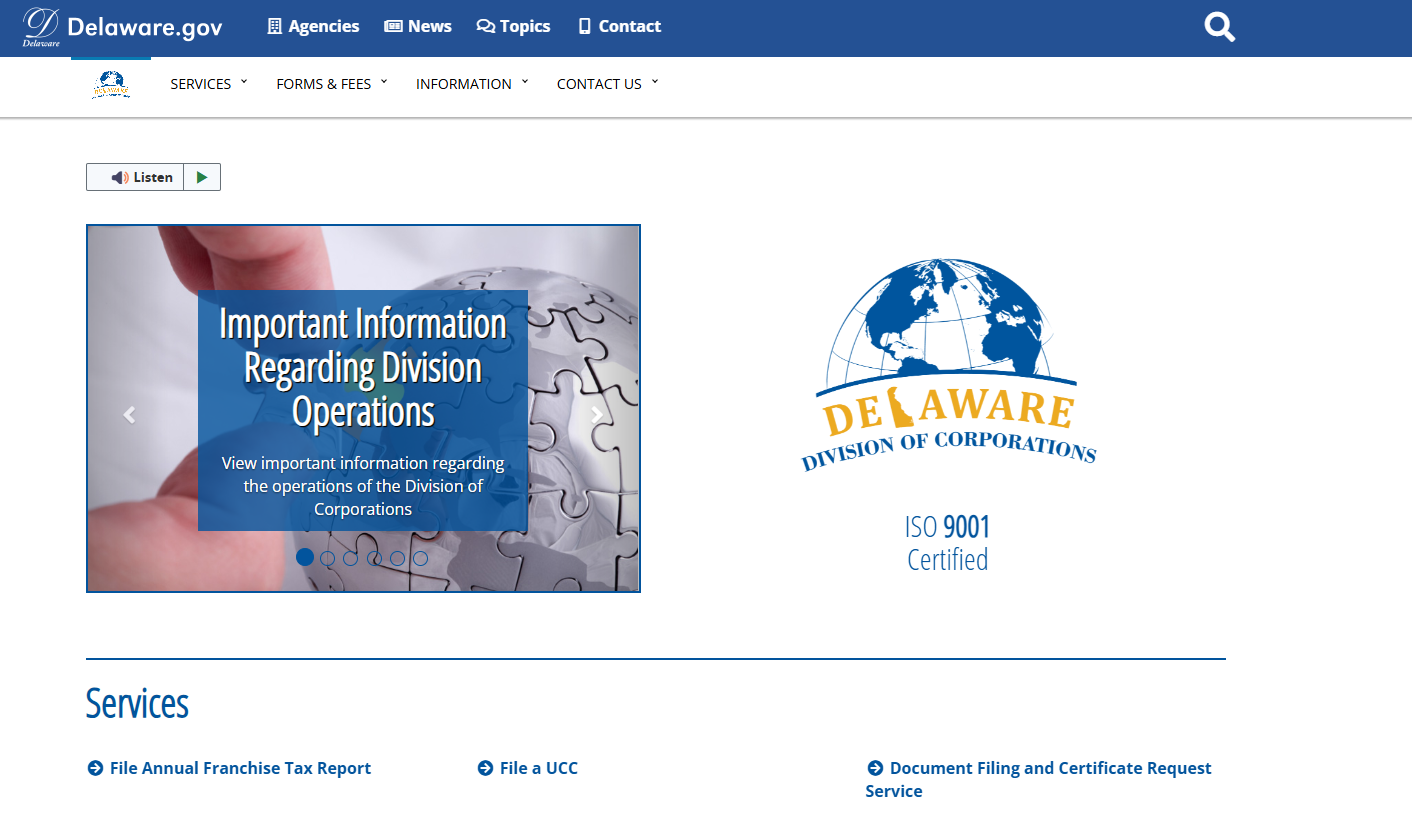
Delaware Annual Franchise Tax

Delaware

What Is It?

This is a statutory obligation maintenance fee imposed by the Delaware Division of Corporations on every active LLC in Delaware. It is a flat-rate fee of $300 and is not dependent on income or the size of the business. payment is just to keep your business legally active on state records.

Payment Details

  • Amount: $300 (fixed for all LLCs)
  • Due Date: every June 1st.
  • Payable To: Delaware Division of Corporations (division of corporations)
  • Filing Method: Online payment (division of corporations website)

Delaware LLCs unlike corporations do not need to file an annual report. LLCs only have to pay the annual franchise tax.

Consequences of Missing the Deadline

For payments not made by June 1st there is:

  • An Automatic penalty of $200, and
  • 1.5% of the unpaid amount every month.

Your business will also be flagged as “Not in Good Standing” by the state. This will:

  • Restrict you from getting a Certificate of Good Standing,
  • Complicate bank account verification, payment processor approval, and
  • Trigger administrative dissolution after a few years of being unresolved.

As advised by Bizstartz:

Make sure to pay your Delaware franchise tax early or allow Bizstartz to manage your annual compliance, and we’ll ensure you never miss your franchise tax deadline!

Filing Requirements for Taxes (IRS Compliance)

Every Delaware LLC has tax responsibilities on a federal level. This is true for LLCs that are wholly owned by non-U.S. residents. Basically, you will have to file some tax documents with the IRS on the LLC business structure and the taxation of the LLC.

To the extent possible, we will discuss.

A. Single-Member LLC (a disregarded entity owned by a foreign individual or foreign company)

If your Delaware LLC is owned by a single member and does not have a U.S. trade or business, you will still file:

These are used to report transactions that your LLC has with its foreign owner, including fuels, payments, and loans.

Due Date: April 15 each year (you can extend it to October 15).

Penalty: Failure to file Form 5472 results in a penalty of $25,000, even if your LLC has no revenue.

If your LLC does business in the U.S., you’ll probably need Form 1040-NR (if you are an individual) or Form 1120-F (if you are a foreign corporation) to report U.S.-sourced income.

B. Multi-Member LLC (Partnership Tax Classification)

If your Delaware LLC has 2 or more members, the IRS automatically considers it a partnership unless you state otherwise. In such a case:

  • You are to submit Form 1065 (U.S. Partnership Return), and
  • You are to give each member a Schedule K-1 that summarizes the member’s portion of the company’s income, deductions, and credits, as well as any taxes paid.

Even if your LLC has no income, you must file it every year to avoid compliance problems.

Due Date: March 15 (or September 15 if an extension is requested).

If the LLC has foreign partners, it must also deal with withholding taxes using Forms 8804 and 8805 for payments that are passed out to them.

C. LLC Electing to be Taxed as a Corporation

LLCs particularly the ones that are seeking to invest venture capital, or profit reinvestment, often elect to be taxed as a C-Corporation.

Here, the LLC submits:

  • Form 1120 (U.S. Corporation Income Tax Return) and
  • It pays a 21% corporate income tax on net taxable income, which is a flat rate corporate income tax.

This structure may work better for businesses that are scaling up, are planning to raise capital, or for businesses that want to keep profits within the business.

Other Important Federal Filings

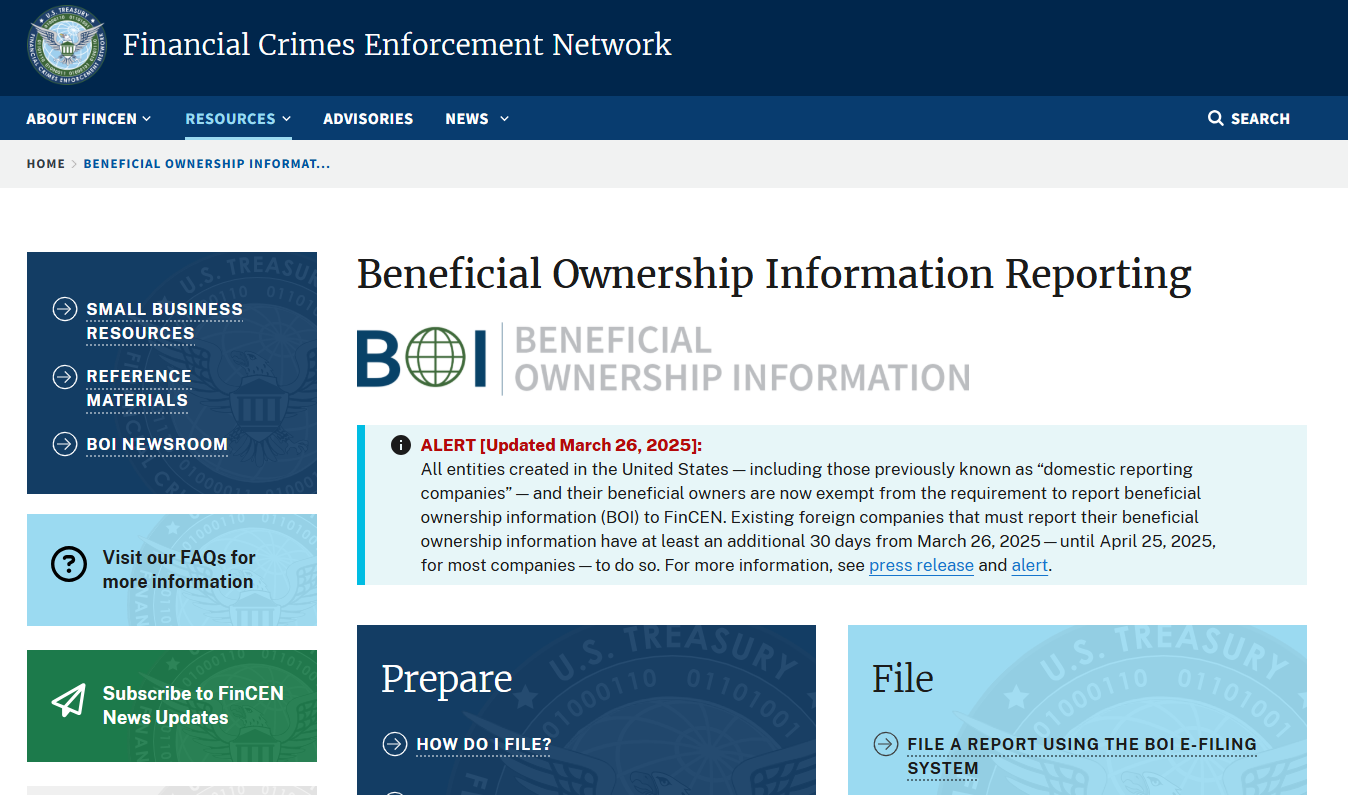
BOI Filing

Besides income tax, owners of Delaware LLCs will also need to submit:

a. BOI Report (Beneficial Ownership Information)

Every U.S. LLC must, starting 2024 submit a Beneficial Ownership Information Report to FinCEN. This falls under the Corporate Transparency Act (CTA).

This report shows who the actual owners and controllers of the business are.

  • When is it due? Within 90 days of starting the LLC, or for pre-existing LLCs, by January 1, 2025.
  • What is the penalty for not filing? Up to $500 for every day the report is late.

b. FBAR (Foreign Bank Account Report)

Your Delaware LLC must file FinCEN Form 114 (FBAR) by April 15 if during the year it holds foreign bank accounts and the total of those accounts is over $10,000.

c. Form 1040-NR

Non-U.S. members that receive income from a U.S. source must file Form 1040-NR declaring the income that they earned through the LLC.

Delaware State Income Tax Considerations

A primary advantage to forming an LLC in Delaware, is that if your business does not operate in Delaware, you won’t have to pay any state income tax.

Nonetheless, if your business meets any of the following conditions:

  • Has employees in Delaware,
  • Has business facilities in Delaware or
  • Has customers located in Delaware,

Your business may be responsible for Delaware:

  • State Income Tax and
  • Delaware Gross Receipts Tax (on total sales revenue your business earns).

Most foreign LLCs that conduct business outside the U.S, or operate over the Internet, do not have to worry about paying taxes, and for that reason, Delaware is seen as a cost effective and economically favorable jurisdiction.

Compliance and Good Standing

Access to U.S. banking, merchant accounts, and investors’ trust depends on the good standing of your Delaware LLC. Good standing of your LLC is also a requirement for maintaining your business’s ongoing operational status.

Here is a checklist that will help you remain compliant:

  • You must pay the annual franchise tax of $300 before June 1.
  • You must file IRS returns (Form 5472, 1065, or 1120).
  • If applicable, file your BOI Report.
  • Keep your Registered Agent service to the LLC, and have the service for every LLC.
  • If inactive, renew your EIN, and if ownership of the business changes, inform the IRS of business changes.
  • Keep all records of income and expenses.
  • File your annual tax returns even if you earned zero income as this will keep your LLC active and penalty free.

Consequences of Non-Compliance

  • In the event of late filing, the penalties can build to $25,000 for each IRS form.
  • Delaware can take away your company’s good standing status.
  • Your company’s accounts can be suspended or rejected during bank KYC updates.
  • Delaware Division of Corporations can administratively dissolve your company.

Maintaining international trust and operational status for your company is a benefit of proactive compliance.

How Bizstartz Aids You in Filing and Keeping Your Delaware LLC Compliant

For the majority of people not living in the U.S., U.S. taxes and compliance rules are very complicated and confusing. This is the gap that Bizstartz addresses.

We take care of everything, from the formation of your Delaware LLC to maintenance, and take the stress of compliance off your shoulders every year.

Our professionals take care of the:

🏛️ LLC Formation in Delaware and other U.S. states

🧾 Annual Franchise Tax Payment

📄 Federal Tax Filing (Forms 5472, 1065, 1120)

🔐 FinCEN BOI Report Submission

💼 Registered Agent Services

💰 Bookkeeping & Accounting Services

🪪 EIN & ITIN Application Services

It doesn’t matter if your LLC is active or if you are just setting it up, Bizstartz guarantees that your compliance filings are accurate, timely, and stress-free.

Delaware LLC Annual Filing Checklist (Summary Table)

Requirement Form / Payment Due Date Applies To Penalty for Missing
Delaware Franchise Tax $300 Flat Fee June 1 All LLCs $200 + 1.5% monthly interest
Federal Tax Return Form 5472 / 1065 / 1120 March 15 or April 15 Based on LLC type $25,000+ per form
BOI Report FinCEN Online Portal Within 90 days of formation All LLCs $500/day
FBAR FinCEN Form 114 April 15 LLCs with foreign accounts >$10,000 Civil/Criminal penalties
Registered Agent Annual Renewal Yearly All LLCs LLC becomes inactive

Conclusion: Stay Compliant, Stay Protected

Delaware is the number one choice for entrepreneurs across the globe because of its privacy, efficient taxation and compliance world-class corporate laws.

This is only possible if your company stays compliant with the required annual filings and payments. Maintaining your registered agent, paying your $300 Franchise Tax, and filing your federal returns are essential steps to keep your LLC in good standing.

Non-U.S. founders often underestimate the importance of these filings—until it’s too late. This is where working with a compliance expert such as Bizstartz can save you significant fines and protect the ongoing U.S. reputation of your business.

📩 Ready to File Your Delaware LLC Annual Tax?

Let Bizstartz take care of your Delaware LLC Annual Tax Filing from beginning to end.

We will make sure that the filings you need to submit to the Delaware Division of Corporations, the IRS, and FinCEN are done timely and done correctly.

✅ Easy.

✅ Economical.

✅ Full Assurance of Compliance.

👉 Reach out to Bizstartz today so that your Delaware LLC can stay compliant and will maintain active status for 2025 and the years to follow.

Annual Tax Filing for Wyoming LLC Owners: The Complete 2026 Guide

Wyoming remains one of the most business-friendly states in the U.S. This is why non-U.S. residents along with entrepreneurs from around the globe choose to establish their Limited Liability Company (LLC) in Wyoming. It is inexpensive, easy to form, and has great levels of privacy.

Even with the easy formation process, every LLC owner in Wyoming has to pay some sort of tax and compliance filings every year. This ensures the company remains in good standing. If there is no filing done, or if there is some misunderstanding regarding filings, penalties could occur, or administrative dissolution could occur.

In this article, we will provide you with everything you will need to understand annual tax filing for Wyoming LLC Owners. This includes state requirements, federal tax filings, deadlines, and any specifics for non-U.S. residents.

1. The LLC Tax Basics in Wyoming.

What’s the reason for LLC Formation Popularity in Wyoming?

Wyoming is described to be the “Delaware of the West,” for the business friendly environment. There is no state income tax for individuals or corporations, and therefore your LLC will never be charged state income tax, whether your business is in Wyoming or operated from abroad.

There are reasons besides the absence of income tax as to why people establish LLCs in Wyoming:

  • LLC statute provides Lifetime anonymity for members and managers, no public disclosure.
  • Every Wyoming LLC pays low annual renewal fees, starting at just $60.
  • There are no franchise or business privilege taxes.
  • Renewals and compliance are simple to manage through the online filing system.
  • There are strong asset protection laws and separation of personal and business liabilities.

Federal vs. State Tax Obligations

It’s important to distinguish between state compliance and federal tax obligations:

  • State filings are submitted to the Wyoming Secretary of State.
  • Federal filings are submitted to the Internal Revenue Service (IRS).

While there are no taxes at the state level, you must still file annual reports and, for most, a federal tax return. This is especially true for non-resident foreign owners.

2. Wyoming State Level Filings and Compliance

Wyoming Tax

While Wyoming is pro-business, the state still requires each LLC to remain compliant by filing an Annual Report and managing an active Registered Agent.

a. Wyoming Annual Report

The Wyoming Annual Report confirms your company’s ongoing existence and reports the total value of assets located within the state. It’s a basic document, but you must file it.

Key details:

Due dates: On or before the first day of your LLC’s anniversary month every year. If your LLC was created on May 10, 2024, your first annual report will be due on May 1, 2025.

Filing Fees:

  • If your LLC has Wyoming-based assets under $250,000, the fee is $60 minimum.
  • If your LLC has property, inventory, or other assets physically in Wyoming and those assets are worth over $250,000, the fee will be $0.0002 per dollar of those assets.

Filing Method:

Steps

1. Go to the official filing portal.

2. Enter your business name or filing ID.

3. Confirm your registered agent and address.

4. State your total assets in Wyoming.

5. Pay the fee and submit your report.

Penalty for Non-Compliance

If the report is not filed, your LLC will go into a delinquent status. After 60 days, the LLC can be administratively dissolved, meaning the company will be legally dead until it is reinstated with penalties.

b. Registered Agent Renewal

Every Wyoming LLC has to keep a registered agent with a physical address in Wyoming to receive official correspondence and legal documents.

  • Renewal: Your Registered Agent service needs to be renewed every year.
  • Cost: This typically costs between $50-$150 per year, depending on the company.
  • Tip: Bizstartz offers Registered Agent renewal services and makes sure your annual report is submitted on time.

3. Federal Tax Filing Requirements

For tax purposes, Wyoming does not impose tax on your LLC. This d

oes not mean that the IRS does not require annual tax reporting, and that depends on your company’s structure and ownership.

a. Single-Member LLC (Disregarded Entity)

If your LLC has one owner, it is treated as a disregarded entity for federal tax purposes unless you elect corporate status.

For U.S. residents:

  • Report LLC income on Schedule C of Form 1040.

For non-U.S. residents:

  • Report U.S.-sourced income (if any) on Form 1040-NR.
  • File Form 5472 plus pro forma Form 1120 every year, even if you earned no income.
    • These forms show the transactions that the foreign owner has with the LLC.
    • The IRS imposes a $25,000 penalty for failing to file.

Example:

If your foreign-owned Wyoming LLC has a U.S. bank account without U.S. clients, you still must file Form 5472 every year.

b. Multi-Member LLC (Partnership)

If your Wyoming LLC has two or more members, it is treated as a partnership by default.

  • File Form 1065 (U.S. Return of Partnership Income) annually.
  • You should send each partner a Schedule K-1 that details their portion of the profits or losses.
  • For partners abroad, you may have to withhold and pay U.S. taxes via Forms 8804 and 8805.

Due: March 15 for each year (or submit form 7004 for a 6 months extension

c. LLC Taxed as a Corporation

If you have elected for corporate taxation:

  • For a C Corporation: You will file a Form 1120 by April 15.
  • For an S Corporation (for U.S. owners only): You will file a Form 1120-S by March 15.

As to taxation, corporation is subject to a flat 21% federal income tax rate on net income and any other tax that may be owed by the corporation to the shareholders.

4. Wyoming LLC Tax Filing Deadlines

Filing Type Form Due Date Responsible Agency Notes
Wyoming Annual Report Anniversary month WY Secretary of State $60 minimum fee
Registered Agent Renewal Anniversary month WY Secretary of State Required for good standing
Single-Member (Foreign-Owned) Form 5472 + Form 1120 April 15 IRS Mandatory even if no income
Multi-Member LLC Form 1065 + K-1s March 15 IRS Partnership filing
C Corporation Form 1120 April 15 IRS Flat 21% tax rate
S Corporation Form 1120-S March 15 IRS U.S. citizens only

5. Taxes on Wyoming LLCs Owned by Non-U.S. Residents

Some foreign business owners think they don’t need to file any paperwork as long as their LLC isn’t ‘doing business’ in the U.S. That’s not true.

Foreign single-member LLC owners must submit annually:

  • Form 5472 + pro forma 1120, every year.
  • EIN (Employer Identification Number) to identify your company.

If your LLC has income that’s connected to U.S. trade, such as sales to customers in the U.S., you have to file Form 1040-NR and pay taxes on that income.

Note: LLCs from Wyoming that don’t have U.S.-source income don’t pay federal taxes, but they still owe the info forms for federal tax requirements.

6. Mistakes of Wyoming LLC Owners

  • Not filing an Annual Report can result in administrative dissolution.
  • Ignoring Form 5472 can result in penalties.
  • Using a virtual address instead of a registered agent’s physical address violates state rules.
  • Failing to keep basic bookkeeping means that your filings and proof of taxes not owed in the U.S. become a lot harder to prepare.
  • Neglecting to renew Registered Agent information on a yearly basis may seem small, but it is a crucial part of compliance.

7. Annual Compliance Checklist for Wyoming LLC Owners

Task Frequency Deadline Responsible Party
Renew Registered Agent Annual Anniversary month Owner / Bizstartz
File Wyoming Annual Report Annual Anniversary month Owner / Bizstartz
File Federal Tax Return (IRS) Annual March–April Accountant / Bizstartz
File Form 5472 (if foreign-owned) Annual April 15 Owner / Bizstartz
Maintain Accounting Records Monthly Ongoing Bookkeeper
Renew Business Licenses Annual Varies Owner

8. How Bizstartz Assists Owners of Wyoming LLCs

At Bizstartz, we assist both U.S. citizens and international entrepreneurs with all aspects of Wyoming LLC compliance.

We offer:

  • Compliance with federal and state tax filings (Forms 1040-NR, 1065, 5472, 1120, etc.)
  • Submission of annual reports and state renewal tracking
  • Registered Agent services and renewal reminders
  • Bookkeeping and accounting service
  • BOI (Beneficial Ownership Information) filing compliance
  • Assistance with EIN and ITIN applications

Bizstartz works to guarantee that each year, without hassle and confusion, your LLC is fully compliant and maintains a good standing whether you are operating an e-commerce store, a consulting company, or a SaaS business.

9. Frequently Asked Questions (FAQs)

1. Does my Wyoming LLC have to file taxes even if it didn’t make any money?

Yes. If your LLC is foreign owned, it didn’t generate income, and you fail to file necessary documents (Form 5472 + pro forma 1120), you would incur a penalty of at least $25,000.

2. Can a non-U.S. resident file Wyoming LLC taxes online?

Absolutely. Each federal form is fileable online (inclusive of Form 5472, 1120, 1065, etc.), or through a U.S. accountant. Bizstartz assists non-residents in filing these forms properly.

3. What happens if I miss my Wyoming Annual Report deadline?

Your LLC will be classified as delinquent, and after 60 days, it will most likely be dissolved. Paying a late fee and additional paperwork will allow you to reinstate your LLC.

4. Do I need to pay franchise or privilege tax in Wyoming?

The answer is no. Wyoming is franchise and privilege tax free and does not require business licenses.

5. How much does it cost to maintain a Wyoming LLC annually?

Estimated yearly costs consist of the following:

  • $60 annual report fee
  • $50–$150 registered agent renewal
  • Optional accounting and tax filing services (varies based on activity)

If you engage in no elaborate operations, the average yearly cost to maintain your Wyoming LLC is $150–$300.

10. Final Thoughts

The state of Wyoming is a great location for business owners who want ease, privacy, and low taxes. Regardless of how relaxed Wyoming’s systems are, no annual filings are optional. Each LLC is required to submit both state and federal reports to keep their business legal.

Keeping an Annual Report, IRS filings, and Registered Agent renewals up to date will ensure that your company remains in good standing, protects your privacy, and maintains your limited liability coverage.

With Bizstartz, you can relax knowing your filings are handled professionally, from bookkeeping, and tax filings, to renewals.

👉 Ready to file your Wyoming LLC taxes or annual report?

Bizstartz will help you confidently stay compliant.

It is simple, secure, and seamless for global entrepreneurs to manage their companies in the U.S. with us.

How to Get a Certificate of Good Standing for Your U.S. LLC

LLCs in the US offer flexibility, liability protection, and global business respect. Yet, to remain legitimate and active, the company must comply with the law, and, in particular, the state law.

The most important document that states your company is active is the Certificate of Good Standing. Banks, foreign authorities, prospective business partners, and even investors demand this document to show that your company exists and appropriately complies with the law.

In this post, I will describe what the document is, what its components are, the reasons it is important, who specifically needs it, and how to get it if you run your company outside the US.

What is a Certificate of Good Standing?

A Certificate of Good Standing (or, in some states, Certificate of Existence, Certificate of Status, Certificate of Authorization) is a document issued by the Secretary of State or relevant state authority of the state where your LLC is registered.

This confirms that your business:

  • Was legally incorporated under that state’s laws,
  • Has met all yearly filing obligations,
  • Has settled all applicable fees and state taxes,
  • Is permitted to operate, and
  • Is not suspended, revoked, or dissolved.

In a nutshell, this shows that your business remains active, compliant, and in good standing.

For instance, certificates provided to businesses that registered their LLCs in Delaware would come from the Delaware Division of Corporations. In Wyoming, it comes from the Wyoming Secretary of State, and so on.

This document indicates to the world, including potential financial institutions, customers, and collaborators, that your business is orderly and operational.

Why You Might Need a Certificate of Good Standing

Certificate

Although this may not be essential for your day-to-day functions, it may be necessary for certain business transactions and compliance checks. Below are the scenarios when you would need a Certificate of Good Standing.

1. Opening a U.S. Bank Account

Most U.S. and foreign banks will ask for a current Certificate of Good Standing when an LLC is trying to open a business community bank account.

This document assures the bank that your business is legally registered and in good standing with all state requirements.

For business owners that live in another country, this may be required during verification with banks, whether you are doing it online, in person, or using other methods.

2. Registering Your LLC in Another State

If your business wants to operate in another state, you need to get foreign qualification. The new state will ask you to provide a Certificate of Good Standing from your home state before they approve your registration.

3. Applying for Loans, Credit, or Business Funding

When deciding whether to provide a loan or other corporate financing, lenders, investors, and banks check if your company holds a Certificate of Good Standing to confirm it is legally recognized and financially stable.

4. Renewing Business Licenses or Permits

If you have certain government contracts and professional licenses, or local business permits, you will need to show that your LLC is current with state filings and taxes.

5. Mergers, Acquisitions, or Selling Your Company

In case of a business sale or merger, the purchaser’s counsel will ask for a Certificate of Good Standing to make sure the LLC is valid and there’s no legal issue.

6. Building Business Credibility

When you have a Certificate of Good Standing, it shows your clients, investors, and business partners that you are legally compliant, and operate your business professionally and transparently. This is especially important to trust-based relationships with clients in other countries.

Who Can Request a Certificate of Good Standing?

These individuals are generally permitted to make a request:

  • The LLC’s owner or member
  • An appointed manager who can represent the LLC
  • A designated third party, like a registered agent, accountant, or Bizstartz

Remote operation of LLCs by US entrepreneurs often involves the need for professional help.

At Bizstartz, we manage verifying your compliance, applying for the certificate, and electronically delivering the certificate to you, all without the need for a US address or your physical presence.

Steps to Obtain a Certificate of Good Standing

While different states have a few variations, the steps for obtaining a certificate of good standing are generally the same. Here’s how you can do that:

Step 1: Check Compliance Status

Before you can apply for the certificate, it is vital to determine whether your LLC is eligible to apply for a certificate of good standing. That involves confirming:

  • An Annual Report, if your state mandates it, has been filed.
  • All taxes and business entity fees have been paid.
  • All filed documents have up-to-date Registered Agent details.
  • You are free from all administrative actions, penalties, and enforcement actions.

If your LLC has compliance issues, the state will not issue the certificate and you must address those issues first.

Check your compliance status on the Secretary of State’s business search portal, or let Bizstartz do it for you.

Step 2: Go to the Secretary of State’s Website

Business registrations and certificates for your specific state as well as registrations by business type, are managed by the business registrations and certificates managing divisions of the Secretary of State.

For example, you can do the following to find the correct website for your state:

  • Delaware: Division of Corporations
  • Wyoming: Secretary of State – Business Division
  • Florida: Department of State – Division of Corporations (Sunbiz.org)
  • Texas: Texas Secretary of State

These sites allow you to search for business records, order documents, and certificates.

Step 3: Look for Your LLC

Type your LLC’s name or entity number in the business search area. Once you’ve located your company listing, you should see an option to “Order Certificate of Good Standing,” “Request Certificate of Existence,” or “Order Status Certificate.”

Before continuing, confirm that the company status displays Active, Good Standing, or Current.

If it displays “Inactive,” “Dissolved,” or “Not in Good Standing,” you must address compliance issues first.

Step 4: Place the Order

After deciding which form of the certificate you need, you can go ahead and place the order. Usually, for this, you need to:

  • Decide which certificate you need, the Certificate of Good Standing or Certificate of Status.
  • Give the name of your LLC or your filing number.
  • Process payment of a small fee (which ranges anywhere between $10 to $50, depending on your state).
  • Choose how you’d like to receive your certificate (digitally through your email or through regular mail).

States like Wyoming and Delaware let you download your certificates instantly in PDF format. California and Texas take this time to process your order, which is typically 2-5 business days.

Step 5: Receive the Certificate

After your order has been approved, you will receive a state-sealed CC from your LLC which states:

  • Your LLC’s legal name
  • Your state entity number
  • Date of formation
  • A statement which expresses that your LLC is in Good Standing
  • A good standing Certificate signed with the Secretary of State’s official seal.

This certificate is the one that satisfies proof of compliance and can be required by many institutions.

How Long Is a Certificate of Good Standing Valid?

Certificate of GS

A Certificate of Good Standing has no expiration, the only thing is that it reflects the status of your company the moment it was issued.

A certificate is often required to be issued within the last 30 to 90 days.

This is especially true if you are applying for a business bank account or expanding to another state. In this case, it’s best to request a new certificate just prior to submission.

What If Your LLC Is Not in Good Standing?

If your LLC is no longer in good standing, don’t worry, it can be reinstated.

Here are some important issues along with ways to fix and reinstate LLC.

Common Issues:

  • Failure to file annual reports
  • Non-payment of state filing fees or franchise taxes
  • Expired Registered Agent
  • Administrative dissolution by the state

How to Fix It:

  • File any missing annual reports
  • Pay any outstanding fees or penalties
  • Update your Registered Agent
  • Reinstatement Application if dissolved.

Once LLC compliance is reinstated, apply for the Certificate of Good Standing.

The process can be confusing for non-residents. At Bizstartz, we can complete every step: checking your company records, reinstating your company with the state, and ordering your certificate.

How Bizstartz Can Help You Obtain a Certificate of Good Standing

At Bizstartz, we help international and domestic entrepreneurs integrate and managed their US LLCs, which also includes compliance documentation to complete the business certificate of good standing..

What Our Team Can Do

  • Assess the LLC’s compliance status as shown in the state registry.
  • File overdue annual reports and reinstate inactive LLCs as necessary.
  • Directly request the certificate from the Secretary of State.
  • Send you an official digital copy of the certificate you can give to banks and other partners.

You don’t need a U.S. address or presence. We’ll take care of everything online.

Conclusion

In the U.S., a Certificate of Good Standing document is necessary to validate the legality and compliance of your business in all values.

You don’t just gain credibility from a Certificate of Good Standing; you open several important business doors. Some of the doors you open include the ability to open business accounts and even expand internationally.

As long as you remain compliant, your LLC will remain active, preventing penalties, dissolution, and administrative delays.

From startup founders and eCommerce sellers to international entrepreneurs managing their U.S. business from abroad, Bizstartz can streamline the process.

🚀 Obtain Your Certificate of Good Standing from Bizstartz

Let Bizstartz deal with all compliance and paperwork and let you get back to your business where you belong.

✅ We assess your company’s status.
✅ We file any overdue reports.
✅ We request your certificate and send it to you.

📞 Contact Bizstartz.com to get started.

UK Limited Company Compliance Requirements: The Complete 2025 Guide for Entrepreneurs

The UK remains one of the most trusted and transparent business jurisdictions in the global context. Its legal system is stable, and company formation is efficient, making the UK a global magnet for entrepreneurs and investors.

Limited Companies (LTDs) registered in the UK, whether the entrepreneurs or investors are physically in the UK or abroad, gain credibility, competitive taxation, and the opportunity to trade internationally.

Nonetheless, formation is merely the start. Every Limited Company registered in the UK has legal, fiscal and business administrative duties that are continual and mandatory.

They are not optional. Your business must keep “good standing” with Companies House and HM Revenue & Customs (HMRC).

It is also important to note that these duties, should they be ignored, can culminate in substantial penalties, being barred from company directorship, or even company closure.

To help you in this area, the following guide to compliance for UK Limited Companies is divided into chapters and will keep you compliant regardless of whether you are managing your business from the UK or abroad.

Annual Confirmation Statement (CS01)

The Confirmation Statement, formerly the Annual Return, is essential for compliance for any UK Limited Company, perhaps the simplest one at that. It communicates to Companies House that the documents they have on record do not need updating.

What it Holds

The Confirmation Statement also provides or confirms:

  • the company’s registered office address
  • the names and service addresses of directors
  • the details of shareholders and the shareholding structure
  • Persons with Significant Control (PSC)
  • the company’s business activity (SIC code)

Even when there’s no change, you have to confirm these details at least annually.

Filing Deadlines and Fees:

  • Every 12 months is the legal requirement, however, if the information changes, it can be filed more often.
  • The cost is £13 when filed online and £40 for paper submissions.
  • It’s due one year from the incorporation date and annually from there or on the date of the last Confirmation Statement.

Companies that do not submit this statement can be struck off the record.

Importance:

The Confirmation Statement keeps your company’s reputation and transparency intact. It also helps the government check that the company’s ownership and structure is not misused for illegal activities.

Annual Accounts (Financial Statements)

Accounting

Every Limited Company in the UK, whether it is dormant or actively trading, must prepare and submit annual financial accounts to Companies House.

This document serves as the company’s yearly financial performance and health summary.

Annual Accounts:

Standard annual accounts must include the following:

  • Balance sheet (assets, liabilities, and equity)
  • Profit and loss statement (income and expenses)
  • Explanatory notes to the accounts
  • A director’s report (only for medium and large companies)
  • An auditor’s report (if applicable)

Deadlines:

  • First set must be submitted within 21 months after incorporation.
  • Subsequent accounts must be submitted 9 months after the financial year ends.

Accounts Based on Company Size:

  • Accounts for Micro-entities– For very small businesses (turnover ≤ £632,000). Less detailed financial statements and notes.
  • Accounts for Small companies– For small businesses (turnover ≤ £10.2 million).
  • Accounts for Medium and large companies– Full financial reporting is expected.
  • Dormant accounts – These relate to companies that have not traded or engaged in financial activity for the whole year.

Significance of Annual Accounts

  • They guarantee financial transparency and adherence to the law.
  • They establish credibility for investors, suppliers, and customers.
  • They are necessary to obtain business loans or form partnerships.
  • They serve the purpose of calculating your Corporations Tax.

Corporation Tax Registration And Filing (CT600)

When your company starts trading, meaning it is conducting business, providing services, or generating income, you have three months to register for Corporations Tax with HMRC. Each year the company must also file a Corporation Tax Return (CT600), even if there are no profits in the company.

Important Notes:

  • The Corporation Tax Return must contain your company’s profit and loss accounts, any claimable expenditure, and any tax amendments.
  • The Corporation Tax rate for the year 2025 in the UK is 25%. However, companies with profits under 50,000 pounds will qualify for the small profit rate of 19%.
  • You must pay your Corporation Tax within 9 months and 1 day after the close of your accounting period.
  • And you must file your Corporation Tax Return within 12 months of the close of your accounting period.

Why It Matters:

Filing Corporation Tax correctly is important because it helps your company avoid penalties and is compliant with UK laws. It is also important because you avoid fines and interest for overdue payments.

Tip for Non-Residents:

If you’re a Non-Resident UK Director, letting a professional compliance accountant, or a compliance firm like Bizstartz do the work for you will ensure that your filings will comply with UK standards.

Keeping a UK Business Bank Account

Global banking

Although a business may not legally be required to have a separate business bank account in the UK, it is still a best practice and legally required in some other countries.

A business bank account promotes the principles of segregation of accounts and the simplicity of tax and bookkeeping records, thereby making the accountant’s job much easier.

Why It’s Important:

  • It permits the company to maintain its separate juridical personality.
  • It provides a clear audit trail for HMRC.
  • It verifies the income and expenses for the tax authorities.
  • It increases the firm’s goodwill in business transactions.
  • It helps avoid unnecessary business costs.

It is true that for Non-Resident UK Directors, the traditional UK bank account can be opened with in-person verification. On the other hand, accounts opened with modern UK Fintechs such Wise Business, Revolut Business, Payoneer and Monzo Business can be opened remotely and will have UK business banking compliance.

Bookkeeping and Record Keeping

Every Limited Company in the UK is obliged to keep accurate and up-to-date record of the business accounts. This record provides the basis for your annual accounts, tax filings, and your audits.

What to Keep:

  • Sales invoices and receipts
  • Purchase invoices and bills
  • Cash Book and Bank Statements
  • VAT returns and submissions
  • Records of payroll and employees
  • Records of directors expenses
  • Loan and investment agreements

How Long to Keep Records:

HMRC expects you to keep all records for at least six years after the end of the accounting period they relate to.

As long as digital records can be produced easily upon request, they are accepted.

Benefits of Proper Bookkeeping:

  • Makes the annual tax filings easier.
  • Prevent penalties for records that are missing.
  • Avoid legal complications by providing accurate insight for decision making.
  • Preserve compliance during HMRC audits.

VAT Registration and Ongoing Compliance

Your company must register for Value Added Tax (VAT) if your taxable turnover is more than £90,000 a year (2025 onwards).

If your turnover is less than this, you can register for VAT voluntarily. This can benefit your business as you can reclaim your expenses VAT

Once Registered, You Must:

  • Charge VAT on all eligible sales (output VAT)
  • Reclaim VAT on business expenses (input VAT)
  • Submit VAT Returns to HMRC (usually online monthly).
  • Hold on to your detailed VAT records for a minimum of six years.

VAT for Non-UK Residents:

Are you based outside the UK but supplying goods or services to UK customers or using UK fulfilment centers like Amazon FBA? If yes, you may need to register for VAT even if you do not have an office in the UK.

It’s best to accurately identify your VAT obligations to avoid any compliance issues or unexpected tax invoices in the future.

PAYE and Payroll Obligations (If You Have Employees or Directors)

If your business pays salaries for any employees or directors, you need to register with HMRC, and you are required to operate PAYE (Pay As You Earn) system.

What Does PAYE Involve? In short, you need to

  • deduct PAYE tax, and National insurance contributions from your employees’ remuneration,
  • pay employer’s contributions of National Insurance,
  • send Real Time Information (RTI) every time you pay an employee, and
  • give payslips, P45, and P60 to employees.

Director Payroll

If your company has only one director, and that director is paid a salary, you are also required to adhere to PAYE regulations. Many directors in the UK pay themselves a small salary and the rest of the remuneration is in dividends. This has to be properly documented.

Registered Office Address and Service Address

Registered Address

Every UK company must keep a valid Registered Office Address in the UK. This must be a physical location (no PO boxes) and will be publicly displayed on the Companies House register. It is where you will send all official documents and correspondence.

Important:

  • This address has to be a physical UK address (no PO Box)
  • You must be able to receive your official correspondence from HMRC and Companies House there.
  • If you don’t have a UK office, you could use a registered agent address, like the one Bizstartz provides.

Director’s Service Address:

Every director is required to have a Service Address. This can also be the registered office. This is a great way to keep a director’s personal address off the public record.

PSC (Persons with Significant Control) Register

The PSC Register (People with Significant Control) aims to stop the misuse of companies, especially concerning money laundering and tax evasion.

A “Person with Significant Control” meets one of these criteria:

  • Holds over 25% of shares or voting rights.
  • Can appoint or remove a majority of directors.
  • Has substantial influence over business decisions.

Compliance Steps:

  • Record the PSC details in your internal company register.
  • Submit to Companies House.
  • Update within 14 days of any change.

Directors are personally liable for any legal repercussions of failing to maintain the register.

2024 Update on Beneficial Ownership Information (BOI) Filing

From March 2024, each company, under the Economic Crime and Corporate Transparency Act, will be required to submit Beneficial Ownership Information (BOI) to Companies House.

This includes:

  • Verified identification of directors, shareholders, and PSCs.
  • Proof of identity and residential address for directors.

Strengthening corporate transparency and preventing the misuse of UK companies for fraud or illicit activities has Bizstartz assist clients in filing BOI accurately at formation and annually.

Dormant Company Obligations

A company that has not traded during the accounting year is classified as dormant.

Compliance requirements cannot be ignored just because the company is dormant.

Dormant companies must:

  • File dormant company accounts with Companies House annually.
  • File the Confirmation Statement every year.
  • Maintain a registered office address in the UK.

Simple updates like these, when not filed, inactive companies can still be at risk for late fees and potential strike-off.

Penalties for Non-Compliance

Non-compliance of statutory requirements brings large fines from Companies House and HMRC.

Common penalties include:

  • Late Filing of Accounts: £150 to £1,500 (depending on delay)
  • Failure to File Confirmation Statement: Company may be struck off
  • Late Tax Returns: £100 initial fine plus daily penalties
  • Director Disqualification: For repeated non-compliance

Avoiding penalties is in your best interest, as is maintaining compliance for the sake of trust with banks, investors, and customers.

How Bizstartz Helps You Stay Fully Compliant

Tackling compliance issues in the UK can be quite complex for many international entrepreneurs, especially if you’re running your business from overseas. You may not even know what compliance really is.

Our experts handle every aspect of company compliance, including:

  • Preparation and filing of annual accounts
  • Corporation Tax and bookkeeping services
  • Confirmation Statement submission
  • Registered office and mail forwarding
  • BOI filing and PSC register updates
  • VAT registration and payroll setup

With all your compliance needs covered, you can focus on the growth of your business, while we ensure your UK Limited Company is compliant with the law at all times.

Final Thoughts

Compliance is not simply a law requirement, it is also the cornerstone of your business credibility. Likewise, complying with the Companies House and HMRC is vital if you have a dormant UK Limited Company.

With Bizstartz, you can be confident all your UK business filings are compliant, accurate, and on time with the law, while you focus on growing your business.

📋 UK Company Compliance Checklist

Requirement Description Deadline Filing Authority
Confirmation Statement Confirms company details annually Every 12 months Companies House
Annual Accounts Financial statements showing company activity 9 months after year-end Companies House
Corporation Tax Return Report and pay Corporation Tax 12 months after year-end HMRC
VAT Registration Required if turnover exceeds £90,000 Upon reaching threshold HMRC
PAYE Registration For employers or directors on payroll Before paying salaries HMRC
BOI Filing Identity verification for directors/owners Upon formation and annually Companies House
PSC Register Lists individuals with significant control Within 14 days of change Companies House
Registered Office Must be active and located in the UK Continuous Companies House
Bookkeeping Maintain business records for audit Ongoing HMRC
Dormant Accounts For inactive companies Annually Companies House


UK Limited Company Tax Guide for Non-Residents (2025 Update)

The United Kingdom continues to be one of the globe’s most trusted and welcoming places for entrepreneurs to do business. The country’s stable legal system, highly developed international banking and finance infrastructure, and worldwide reputation, offers peace of mind to those who want to start to an international business.

Without even stepping foot in the country, foreign entrepreneurs can create a UK Limited Company (LTD) through a simple online registration system.

One of the first and most important questions business owners ask is:

“If I do not live in the UK, do I still have to pay UK taxes?”

The lack of understanding of legal UK tax obligations, for a non-resident business owner planning to set up a UK LTD, will most certainly lead to hidden costs, risky legal issues, and complex compliance problems.

This is a straightforward article created by Bizstartz describing the tax obligations of non-resident business owners in the UK, such as corporation tax, VAT, and compliance rules, which will enable you to run your business legally.

1. Can Non-Residents Own a UK Limited Company?

Certainly! In fact, the UK permits complete ownership of Limited Companies by individuals from outside the country, without the need for residence in the UK. You can register a company without ever having a UK passport, visiting the UK, or living in the country. This is ideal for:

  • E-commerce entrepreneurs targeting the global market
  • Freelancers and consultants establishing an international footprint
  • Freelancers servicing multiple countries
  • Startups trying to gain trust and credibility in the UK

With Bizstartz, non-resident entrepreneurs can register their UK LTD company fully online. This includes:

  • Company formation: You can choose your company name, share structure, and directors
  • Administer a Registered office address: This is a legal address in the UK for official correspondence
  • Facilitating a UK business bank account: This helps with international payment
  • Assisting with VAT registration: This becomes pivotal when your UK sales surpass the threshold
  • Accounting and tax filing: To ensure compliance

Unlike having company registration anywhere else in the world, a UK Limited Company presence and account gives you credibility and makes global banking and payment processors access and marketplaces like amazon, eBay and Shopify easier.

2. When Are UK Limited Companies Required to Pay Taxes?

Taxes

One common misconception is that as soon as a company is formed in the UK, UK taxes must also be paid. In reality, this is not the complete picture. The main consideration is where the company is managed and controlled from.

As stated by HMRC (Her Majesty’s Revenue and Customs) guidelines,

  • A UK Limited Company is tax resident in the UK if its central management and control (normally the board of directors) is exercised in the UK.
  • If your company is managed from outside the UK, it is unlikely that your company will be liable for UK Corporation Tax on worldwide income unless you have UK-source income.

Non-residents will be most impacted by the following.

  • If you are a non-resident director and all decisions are made outside the UK, your company is unlikely to be liable for UK tax on worldwide profits.
  • Even without an office in the UK, and especially if you are managing contracts with UK clients, your company is likely to have UK-source income, and that income will be taxed in the UK.
  • You will likely have to declare the company income in your country of residence as well.

Example:

If a Nepal-based entrepreneur creates a UK LTD, holding global sales, and all board meetings are held in Nepal, the company may not owe UK corporation tax, but the revenue may still need to be declared in Nepal under local tax regulations.

3. Understanding UK Corporation Tax (2025 Rate)

For anyone operating a UK Limited Company, tax corporation is a vital thought. Even non-residents need to understand these rates to adequately organize their finances.

UK Corporation Tax Rates (2025):

Profit Level Tax Rate
Up to £50,000 19%
£50,001 – £250,000 Marginal relief applies
Above £250,000 25%

What does this mean for your business?

  • New startups will be taxed 19%, so the UK is favorable to new businesses because new companies with profits under £50,000 will be taxed less.
  • Companies with profits positioned in the £50,000 to £250,000 range will be taxed named progressively as a result of the marginal remedy.
  • Companies with profits positioned in the £250,000 and above will be taxed 25%.

Example Calculation:

Let’s say your UK LTD makes a profit of £120,000. This means your corporation tax rate is around 22-23%, and marginal relief applies.

It is important to note that non-residents who manage their company abroad can avoid UK corporation tax on global profits, provided that their business does not have UK-source income.

4. UK Source Income and Tax Obligations

If your company’s business is controlled and managed from outside the UK, there are still some instances where your company may be liable to pay UK tax. For example:

  • Income from UK customers: Contracts performed UK or aimed at customers in the UK may be deemed taxable by HMRC .
  • A fixed UK business presence: UK office, employees or other business assets and facilities (e.g. warehouses) and employees can trigger UK tax.
  • Employment: UK employees or staff members generate income or profits for the company.
  • Merged Taxation: UK Trade and Income Tax law: Having UK property in the company’s name results in property or rental income that is in UK taxable.

Non-Residents may wish to consider the following: the location and structure of your company’s operations can influence UK tax.

For example, placing stock in a UK fulfilment center, for example Amazon FBA, may create UK tax liabilities, but shipping stock to customers from abroad may help avoid UK tax liabilities.

5. Double Taxation Treaties

The UK has double taxation treaties with more than 130 countries including with Nepal, India, UAE, USA. Most Western European countries are included in this list, as well as some Eastern European countries.

Double taxation treaties help to stop:

  • Paying tax twice on the same income
  • Help determine the primary country with taxing rights
  • Potentially lower withholding tax on dividends, interest, and royalties

Example: Where a company is managed from Dubai with contracts in the UK, a double taxation treaty may reduce UK withholding taxes and profit tax and ensure profit are all taxed in Dubai.

Wording Tips: Always refer to your country and UK treaty to maximize tax. Bizstartz will assist you in this area.

6. VAT (Value Added Tax) For Non-Resident Companies

VAT regulations are independent of corporation tax and this causes confusion to non-resident business owners.

You must register for VAT when:

  • You keep goods (warehouses and fulfillment centers included) in the UK.
  • You deal with UK customers and your sales turnover is more than the annual limit of £90,000.
  • You bring goods into the UK and you wish to reclaim the import VAT.

If you are registered, your company will have to:

  • Charge VAT on sales.
  • Submit VAT returns to HMRC on a quarterly basis.
  • Maintain proper records for all transactions you entered the UK.

Example:

An e-commerce seller of electronics who uses Amazon FBA to sell to UK customers is even non-resident VAT registered and must charge 20% VAT on the sales.

Bizstartz is here to provide VAT registration and compliance to non-residents to help them with this.

7. Accounts and Annual Filings

bank

All Companies Limited in the UK have annual reporting and filing obligations, even if there is a non-resident owner.

Submit to Companies House:

  • Annual accounts
  • Confirmation statement

To HMRC:

  • Corporation tax return (if applicable)
  • VAT returns (if applicable)

Even dormant companies (no income or transactions) must submit a report labelled “Dormant Company”.

Negative effects of non-compliance:

  • Failing to file on time gives you a penalty of £150–£1,500 a year for your accounts.
  • Dissolution or a strike-off of your company.
  • Loss of reputation for your international business.

Suggestion: Hire specialized accountants for non-resident UK companies. At Bizstartz, we make sure that your filings will always be timely and precise.

How Bizstartz aids non-resident Entrepreneurs?

Businessstartz aids international entrepreneurs in setting up and running UK Limited Companies. These include:

  • Forming a UK company for non-residents that is a completely online procedure.
  • Registered office & mail forwarding.
  • Assisting in opening a UK business bank account.
  • Adding a VAT and EORI for international trade and travel.
  • Filing annual accounts and taxes.
  • Providing ongoing compliance and bookkeeping.

We assist with efficient management, legal compliance, and tax so that you can focus on the international growth of your company.

Key Takeaways

  • Non-residents are allowed to completely own a UK Limited Company even if they are not in the UK
  • There are potential UK corporation tax implications depending on where the business is managed and controlled. If managed and controlled from outside the UK, then there will be no UK corporation tax liability
  • UK tax law applies to income generated in the UK.
  • If you sell or store goods in the UK, you may need to register for VAT.
  • You must make annual filings to Companies House and HMRC.
  • You can rely on double taxation treaties to not be taxed twice.

Final Thoughts

A UK Limited Company is a valuable business formation option for UK tax purposes and for non-residents, as it expands credibility and provides a way to enter new international markets and new operational efficiency.

Tax planning will bring the business unnecessary costs, and it is important to plan for tax compliance. Consulting tax experts will bring the business tax efficiencies and will legalize the business operations.

Even if a non-resident, Bizstartz can cover UK business formation, tax planning, and ongoing compliance.

Start your UK Company today with Bizstartz:

✅ Fully Online Process

✅ Global Founder-Friendly

✅ End-to-End Support

👉 www.bizstartz.com

UK LTD Company Advantages for Dropshipping (Complete 2025 Guide)

For new online entrepreneurs wanting to test the waters, dropshipping offers the easiest way to get in the eCommerce market without a heavy initial investment.

eCommerce entrepreneurs even get the perks of being able to liquidate and sell their products to nearly anyone in the world, and they do not need to worry about the headache of inventory, stock, or storehouses. However, to truly thrive in this field, it is important to build a quality reputation.

One of the ways to build this reputation is to register a company in the UK, which has one of the best company registries in the world. UK Companies House provides one of the best business registries. In addition to a trustworthy and transparent business environment

Without a doubt, the biggest challenge for dropshipping eCommerce retailers is payment processing. With a UK company, they will be able to get and integrate a more reliable and cheaper payment processing and eCommerce integration solutions.

This blog post is dedicated to explaining the perks of registering a UK company for your dropshipping business, even if you are outside the UK.

What is a UK LTD Company?

A company that is UK LTD is a legal company registered in the UK under Companies House, and it is a separate legal body. This is better than a sole proprietorship in that your liabilities are separate from your business.

Establishing a UK LTD company means you’ve got a legal entity that can sign contracts, own property, hold bank accounts, and conduct business worldwide. You also get a Company Registration Number (CRN) that confirms your company is registered and operating legally within the UK.

Characteristics of a UK LTD company include the following:

  • Complete formation and registration online, no physical presence needed in the UK
  • Standalone legal entity, which means liability is limited
  • Global recognition for trust and credibility
  • Access to the UK and EU financial networks

Regardless of your location in the world, for example India, Nepal, the UAE, or any other, UK LTD company formation will considerably improve the financial and operational capabilities, as well as the image of your dropshipping brand in business.

Why Dropshippers Should Form a UK LTD Company

Dropshipping

Limitations of operating a dropshipping business without a registered company include banking and payment processing, as well as getting contracts signed. Suppliers, payment processors, and even customers prefer to transact with registered companies rather than individuals.

Here are the best reasons that show a UK LTD company is a great choice for dropshipping:

1. Establishing World-Wide Business Credibility

In ecommerce, trust is everything. Customers see your store as more professional and reliable if it is registered as a UK company. This credibility helps in conversion of sales and helps in building a loyal customer base.

Here’s why credibility matters:

  • Customers are more likely to buy from a company with a real registration number.
  • Payment processors like Stripe and PayPal trust registered companies.
  • Suppliers and logistics providers are more willing to offer favorable terms.
  • A UK LTD suffix (“LTD”) adds authority and professionalism to your brand name.

In addition to the above, the brand perception is also enhanced worldwide. Customers in the USA, Europe, or Asia will trust a UK company more than an unregistered online seller in any of these countries.

Example:

A Shopify dropshipping store named “LuxBrand LTD” appears significantly more credible than “LuxBrand Shop” with no official registration.

2. Convenient and Quick Online Registration

For non-residents, the simplicity and speed of the registration process in the UK is one of the most appealing benefits of forming a UK company. Unlike other countries that require a physical presence, the UK has fully digitized its company formation system.

Thanks to Bizstartz, going online to register your UK LTD company is simple and can be done without physically being in the UK or working with local directors. The company will send all your digital formation documents to your email in no more than 24 hours.

The following points are included in Bizstartz UK Company Formation Package:

  • Company formation with Companies House
  • UK Registered Address
  • Digital Certificate of Incorporation
  • Memorandum and Articles of Association
  • Director and Shareholder Setup
  • Free Digital Documents and Business Support

The rest of the world runs quickly and efficiently, and there are no other options as fast as the UK when starting dropshipping businesses. It is no wonder the UK is a top destination for all entrepreneurs launching their businesses.

3. Access to Global Payment Processors

Many dropshippers face the same common problem. Payment processors restrict access.

Stripe, PayPal, and Shopify Payments all limit their services based on the country of the registered business.

If you have a registered UK LTD company, you can apply for and receive verified merchant accounts for the following processors:

  • Stripe UK
  • PayPal UK
  • Shopify Payments UK
  • Wise Business
  • Revolut Business

Merchants can receive and send payments, maintain profits, and manage spending all in different currencies and accounts.

Why it matters for dropshippers:

  • Less chance of your accounts getting flagged or shut down
  • More professional billing and invoicing with your own company name
  • Reduced fees for international sales
  • Connect with Shopify, WooCommerce, and other eCommerce platforms

To sum it up, a UK Company allows you to overcome one of the biggest obstacles for international dropshippers: payment accessibility.

4. Open a UK Business Bank Account

Financial management is another important aspect of growing your dropshipping business.

As a UK LTD company you’ll have the option to open a UK Business Bank Account with online banks as well as some leading UK fintech companies such as:

As a non-UK resident, you’ll even be able to open an online business account. In a couple of days you’ll be able to have multi-currency IBAN accounts where you are able to receive USD, GBP, and EUR payments.

Some Advantages are:

  • Income and expense management all in one account
  • Hold and convert currencies with low exchange rate fees
  • Pay your international suppliers directly
  • Business and personal accounts will be separated

Through Bizstartz, you will receive end-to-end assistance with UK Bank Account opening and payment gateway setup after your company formation.

5. Tax Efficiency and Global Expansion Opportunities

As an international entrepreneur, a UK LTD company gives you flexible options for international taxation.

In the UK, the corporate tax rate is 19%, which is one of the lowest in the developed world.

Also, if a company is managed and controlled from outside the UK, and has no UK operations, non-residents company owners may avoid paying UK taxes.

Some tax benefits are:

  • Exemption from double taxation through UK tax treaties.
  • Lower corporate tax rate in the UK and tax returns relief outside of the UK.
  • Eligibility for tax deductions on legitimate business expenses.
  • Reinvestment of profits into business growth.

Also, a UK LTD company enables unrestricted worldwide business expansion.

It is easier to form business partnerships, get global payment processors, and open foreign business bank accounts.

6. Limited Liability Protection

With dropshipping, there are major risks, such as supplier errors, chargebacks, product returns, and disputes. By setting up as a Limited Company, your personal liability is protected.

Legal action and debt problems may arise, but your personal liability, in the form of your home, car, and other valuable assets, are protected. Your liability is limited to the value of your shares in the company.

This safeguard lets you:

  • Conduct business without worrying about losing your own money
  • Signing contracts and supplier agreements is no longer scary
  • Establish relationships with trust and build partnerships for your business

This is one of the strongest protective laws in the UK, and it’s one of the reasons millions of small businesses globally prefer to register as Limited Companies.

7. Easy to Use With eCommerce Platforms

For UK LTD companies, there is easier integration with popular online marketplaces, including:

  • Shopify
  • Amazon Seller Central (UK & EU)
  • Etsy
  • eBay
  • WooCommerce

These platforms typically ask for verified business details including company registration numbers and UK addresses.

UK LTD companies can:

  • Speed up store verification
  • Access higher-tier seller accounts
  • Formalize business branding
  • Consolidate numerous online stores under one company.

For one, it simplifies your operational management: supplier to customer payments, but it also increases the legitimacy of your store.

8. Better and Stronger Supplier and Fulfillment Partner Relationships

For UK and Chinese suppliers, registered companies are easier to work with. UK LTD companies equate to negotiating power, credibility, and long-term reliability.

Increased supplier relationship benefits:

  • Access wholesale pricing and discounts
  • Accelerated product approvals from AliExpress and CJ Dropshipping
  • Trust with logistics and fulfillment
  • Priority assistance with more favorable delivery terms

When professionalism is exhibited through a company-sponsored invoice, it opens the door for preferential business terms and partnerships.

Can Non-Residents Form a UK LTD Company?

Yes. The UK is one of very few countries that enables non-residents to fully register a company online. UK citizenship or residency is not a requirement.

Non-residents are still able to register:

  • A UK Company
  • A Registered UK Address
  • A UK Business Bank Account
  • EIN / UTR Number
  • Accounting & Bookkeeping support

At Bizstartz, we understand the needs of foreign entrepreneurs really well, including dropshippers, eCommerce owners, freelancers, and a host of other clients.

Everything from Company formation to tax filing is handled remotely and can be managed while you relax.

Final Thoughts

A UK LTD company is a must for any dropshipper seeking to transcend to a global business.

It provides:

  • A registered Company Address – England or Wales
  • Access to high tier Payment processors
  • Tax and liability protection
  • Simplified global operations
  • Professionally credibility

You can dropship anything, home decor, electronics, or fashion while having a registered business in the UK. You can apply for and register for any global dropshipping service.

Start Your UK LTD Company with Bizstartz

If you wish to operate as a UK registered company while scaling your dropshipping business, Bizstartz is the company you can depend on.

✅ Register Your Company in the UK Even if You Don’t Live There

✅ Get a UK Address and a Business Bank Account Set Up

✅ Get Help Setting Up Stripe and PayPal

✅ We Do Your Bookkeeping, Taxes, and Annual Filings

Setting up a UK LTD company is simple and can be done completely online.

👉 To start, go to Bizstartz.com.