7 Different Ways to Get a US Address

Access to a US address can be very helpful even if someone doesn’t reside in America, owing to the current state of the global economy.

A U.S. address can be really helpful as a logistics and credibility asset for business owners, digital nomads, tourists, and even students looking to study abroad.

The following is a customizable list of 7 different ways to get a US address suitable for both personal and professional use:

1. Virtual Mailbox Services

Best for: Individuals working remotely for global companies and businesses that wish to digitally access their U.S. mail.

For the reasonable price of a virtual mailbox, you get a physical as well as an actual address in America. It is not a Post Office Box. Major mail carriers such as USPS, FedEx, and UPS can deliver letters and parcels to these addresses. All incoming mail gets scanned and uploaded to a secure online portal enabling you to view, forward, shred, or store it.

People who do not reside in America but need a permanent address for critical document legal correspondence or packages will find this most helpful.

Notable providers include:

  • iPostal1 (more than 2,500 locations)
  • Anytime Mailbox (broad city/state coverage)
  • Traveling Mailbox (check deposit and other features)
  • Earth Class Mail (often used by new businesses)

Benefits:

  • View your mail from anywhere on the globe,
  • Able to forward packages to your physical location,
  • Some services permit check deposit, document scanning, and even storage,
  • Enable overseas users to show a U.S. presence.

Pricing: Usually varies from $10 to $50/month depending on location and services.

2. U.S. Company Formation

Ideal for: Businesspersons, new businesses, and foreign business owners needing legal presence in the U.S.

When you register a business entity (LLC or Corporation) in the U.S., there is a legal requirement to provide a U.S. address for state filings and government correspondence. Formation services often include a business address within the package. With this, the address can be used as the U.S. business mailing address.

Forwarding of documents, EIN acquisition, and even assisting with a U.S. bank account opening are further offered.

Where to get it:

Bizstartz: Specializes in non-resident LLC formation and comprehensive business services.

Incfile: Offers basic formation package with free registered agent service.

Northwest Registered Agent: Known for privacy and premium mail forwarding.

Benefits:

  • Represent clients legally in U.S.
  • Apply the address from invoices, websites, and business cards.
  • Gain access to U.S. banking services, Stripe, PayPal, and other financial services.
  • Improve brand presence with U.S. clients and vendors.

Non residents frequently set up businesses in Delaware, Wyoming, or Florida because of favorable policies, low operational costs, and tax benefits.

3. U.S. Based Friends or Family

Best for: For personal use, receiving an occasional package, or for short stays.

A friend or family member you trust can serve as your US mailing address. This is a popular option among students and travelers who need a temporary address to receive correspondence or parcels.

There are some important things to note. Therefore, I suggest avoiding using this address for formal business registration or legal filing purposes unless the homeowner is aware and consents.

Points to consider:

  • Always obtain permission in writing to set boundaries and avoid misunderstandings.
  • Do not use this address for registering a business unless legally documented.
  • Expect your mail to blend with theirs if not properly labeled.

Pros:

  • Virtually no expenses involved.
  • Straightforward procedures when obtaining.
  • Great for those planning short term stays, personal deliveries.

Cons: Poor long term compliance termed business use.

4. Package Forwarding Services

Best For: Customers who wish to purchase from US retailers.

A large majority of US based e-commerce stores either do not ship internationally or have exorbitant fees for international shipping. Package forwarding services address these issues by offering you a local shipping address in the US. For a low fee, you can send your purchases there, and the service forwards them to your international location—often consolidating multiple purchases into a single package to save on shipping.

Popular Providers:

  • Shipito: Known for their cost-effective rates and flexible services.
  • MyUS: Offers personal shopper services and provides reliable shipping.
  • Stackry: Best known for package consolidation and forwarding.
  • Borderlinx: Provides tax guidance along with real-time shipping estimates.

Benefits:

  • Access to deals and products available only to US residents.
  • Lower shipping costs by consolidating packages.
  • Support with customs documentation.
  • Return and repacking available through some services.

Ideal for: International shopping users, Amazon users, eBay buyers, and dropshippers.

5. Coworking Spaces or Virtual Offices

Best For: Professionals, remote teams, and businesses who are looking for premium US representation.

Coworking spaces and virtual office service providers sell premium addresses located in commercial zones that are perfect for branding and legitimacy. These spaces often have optional mail handling, receptionist services, and even conference room access if needed.

Popular providers include:

  • Regus: Professional mailing address providers within an international network of office spaces.
  • WeWork: Operates in major cities and provides flexible space and mailing options.
  • Davinci Virtual: Operates virtual offices and specializes in office solutions across the country.

Benefits include:

  • Possession of a prestigious address like New York, San Francisco, or Miami boosts brand credibility and trustworthiness.
  • Access to office amenities and meeting rooms when needed enhance brand credibility.
  • Great for and receiving official correspondence makes brand registration easy.

Pricing: From $50 to $200/month depending on location and features.

6. Post Office Box from USPS

Best for: Domestic mail receipt and simple mail handling within the U.S.

A P.O. Box is a secured lockable mailbox within a post office. It allows receipt of letters and small parcels but does not provide a real street address, meaning that some couriers like Fedex and UPS do not deliver to it.

To set up a P.O. Box, a visit to a U.S. post office is necessary. An in person visit along with ID, proof of address, and a small rental fee are also required.

Guidelines for Obtaining a Rental Mailbox:

  • Visit the official USPS website or a local post office
  • Select a duration of 3, 6, or 12 months
  • The cost differs by location and box size

Alongside Benefits:

  • Offers secure and private storage for mail
  • Aiding those located in the US and outside visiting
  • Cost-effective option for receiving mail regularly

Along with Limitations:

  • Less suitable for receiving packages that need a specified location
  • Not appropriate for business registration or international mail forwarding

7. Mail Forwarding via Registered Agent Services

Best for: People located outside the United States who want to form a company or manage a US-based company remotely.

A registered agent is legally mandated when you are forming an LLC or Corporation in most states of the USA. The majority of registered agents provide mail services to their clients. This enables your business to have a reliable postal address in the USA where legal and state documents are issued and sent to you electronically or physically.

Recommended Providers:

  • Bizstartz: Full-service support for international founders
  • Northwest Registered Agent: Privacy-focused, excellent support
  • LegalZoom: Trusted provider for legal and compliance services

Benefits:

  • Registered address suitable for all state contacts
  • Receipt and forwarding of legal documents is done safely
  • Convenient for dealing with a US company from overseas

Pro Tip: Verify that your registered agent stipulates unrestricted forwarding of materials or defines forwarding costs.

Why One Needs a U.S. Address?

US Address

A person or an organization can benefit in myriad ways using a U.S. address. Here are the reasons why this is needed:

📦 E-commerce Accessibility

International customers can access package forwarding services from US merchants like Walmart, Target, and Best Buy, which is not available to international customers. Therefore, having a US address helps shoppers from these countries who want to shop from these stores.

🧾 Business Formation & Compliance

You require a US business address for LLC or Corporation formation, which allows for receipt of legal notices and correspondence. Without this, your company could be non-compliant or face business delays.

Bother Stripe or PayPal accounts require a US business address. Once that is provided, payments including eCommerce, SaaS, and freelancing businesses can be received hassle-free.

📬 Mail and Package Retrieval

Students wishing to join US institutions, expatriates, and digital nomads can receive documents like legal ones using a US address and international forwarding.

💼 Elevating Your Business Image

An address in the US, such as one on your website, business card, or invoices can establish trust and credibility with American clients. It demonstrates that you have a real business in the country.

🎯 Expansion of the Market

If you are targeting the US market, having a Delaware, Wyoming, or Florida business. These areas aid in the expansion of consumer reach and targeting.

How Bizstartz Can Help You Get a U.S. Address

At Bizstartz, we have years of experience assisting individuals as well as businesses, especially non-U.S. residents, in cultivating a strong online presence for their businesses in the US, in compliance with every federal guideline.

Here’s how we help you get a US address that meets your needs:

🔹 Formation of LLCs with Registered US Addresses

When forming an LLC with Bizstartz, we offer you a US business address as part of the package. The address can be utilized for state registration, banking, and receipt of legal documents.

🔹 Virtual Mailbox

Do you want a US address but have no company? That’s not an issue anymore. Bizstartz provides virtual mailboxes that include mail scanning, forwarding, and package handling, perfect for digital nomads, freelancers, and remote workers.

🔹 Registered

Let us serve as your registered agent in your state of formation. We provide a compliance-ready address that helps keep your business in good standing with authorities in the U.S.

🔹 Mail Scanning and Management

We provide mail forwarding services. All your U.S. mail, whether business or personal, can be scanned, kept, or sent to your secure international location.

🔹 Comprehensive Business Formation

At Bizstartz, we make sure that your U.S. address becomes part of a fully functional business system by offering additional services, such as acquiring an EIN, setting up a U.S. bank account, applying for an ITIN, and even filing BOI documents.

🔹 Straightforward & Competitive Pricing

Our pricing is designed for entrepreneurs, small businesses, and freelancers. There are no hidden costs and everything is clearly stated from the beginning.

🌍 Bizstartz makes it easy to acquire a U.S. address and establish your presence in America without visiting the country. We are trusted by clients from over 50 countries across the globe.

Blog CTA

Conclusion

Getting a U.S. address has never been so simple. If you’re looking to set up a business as an international entrepreneur, shop for American goods, or need a mail handling service while traveling overseas, there is a solution for you.

Consider your objectives and financial plan along with whether a personal or commercial address is needed to make the best selection from the seven options provided above. Each method, ranging from virtual mailboxes to formal business registrations, offers distinct advantages and optimal use cases.


How Much Does a PO Box Cost?

In the current modern era, it is absolutely vital to consider your mail management practices in terms of convenience and security.

If you identify with any of the following: A frequent traveler, business person, modern nomad, or simply value an element of privacy in your life, a PO Box may serve you as a dependable solution. One of the primary inquiries that many people have is: What is the price of a PO Box?

In this all-inclusive guide, we will delve into details on PO Box Cost, considering cost influencing factors like dimensions, rental durations, additional fees, and more to help you make a sound decision.

What is a PO Box?

PO Box refers to Post Office Box. In simple words, a PO Box is a sort of securely numbered box located within a designated area of the Post Office. Rather than physically receiving mail at your home or business, you are able to access your correspondence at your PO Box. Unlike your home mailbox, which requires you to unlock it with a key, you use a passcode terminal.

There are a number of reasons why people opt for PO Boxes, such as

  • For Privacy: Prevent sharing or exposing your personal address.
  • Security: Guard your sensitive correspondence from theft or any form of vandalism.
  • For Stability: Offers guarantees to those who change living residences frequently.
  • Professionalism: An impersonal address for businesses.
  • Speed: Many times mail gets delivered to PO Boxes quicker than home addresses.

Due to these advantages, PO Boxes remain a favorite amongst small business owners, remote workers, students, travelers, and even individuals living in areas with unstable mail services.

What Is the Cost of a PO Box?

po box

There is no flat rate when it comes to renting a PO Box. Various factors determine the pricing, such as:

  • Location of the post office.
  • Size of the box.
  • Length of the rental period (3, 6, or 12 months).
  • Local demand and supply.

Allow us to analyze each of these factors.

1. Location: Where You Rent Matters

The cost of your PO Box greatly depends on its geographical location. The United States Postal Service categorizes post offices into different pricing zones according to population density, real estate values, and the amount of mail sent and received.

Rural or Low Demand Areas: Expect to pay around $20 for a 6-month rental. In some cases, are residents in rural areas may even qualify for free PO Boxes if home delivery isn’t available.

Suburban Areas: Prices tend to be moderate, typically ranging from $30 to $100 depending on box size.

Urban or High-Demand Locations Trends: The prices for a compact box in large metropolitan areas like New York, Los Angeles, and Chicago soars to $150 or above. There is high demand, but limited space.

👉 Pro Tip: For those that have a flexible timetable, consider looking at neighboring towns with more affordable set rates if cost is a big deal.

2. PO Box Sizes and What They Cost

The USPS offers five standard PO Box sizes, each suited to different mailing needs. Here’s a detailed breakdown:

Size Dimensions (approx.) Best For Price Range (6 months)
Size 1 (XS) 3″ x 5.5″ Letters and postcards $20 – $80
Size 2 (S) 5″ x 5.5″ Small envelopes and documents $30 – $100
Size 3 (M) 11″ x 5.5″ Magazines, large envelopes $40 – $150
Size 4 (L) 11″ x 11″ Medium boxes, bulk mail $60 – $250
Size 5 (XL) 22.5″ x 12″ Large packages, businesses $100 – $400+

When choosing a size, think about how often you receive mail and what kind:

  • Size 1 & 2 are ideal for individuals receiving light mail.
  • Size 3 & 4 are great for small business owners or online sellers.
  • Size 5 is best for those expecting regular shipments or large volumes of mail.

3. Rental Terms And Frequency Options

PO Boxes are commonly rented in blocks of:

  • 3 months
  • 6 months
  • 12 months

Initial contracts are commonly bound for a 6 month period, which is often the case for most new clients. The majority of locations offer incremental discounts for extended terms, making it more economical in the long haul.

Example:

A suburban branch might charge:

  • $30 for 3 months
  • $55 for 6 months
  • $100 for 12 months

Renewals, contact information changes, and promotional alerts can be managed through the USPS online account portal.

4. Additional Fees You Should Know About

There are some lesser-known, but essential details to consider when setting up an account:

Key Deposit:

  • USPS typically charges $4 – $8 per key
  • Lost keys may incur additional replacement fees.

Late Fees:

  • A late renewal will incur a fee, from $20 or more depending on how overdue the renewal is.
  • In some cases, the box may be closed and the mail sent back to the original sender.

Lock Change Fee:

  • The box in question may have been tampered with, or if access has been lost, a lock change is done at the cost of $20 – $30.

Premium Services:

Other post offices feature the following services:

  • Street Addressing: Accept FedEx UPS and other private carrier packages sent to the PO Box and address them in a street-style format.
  • Email/Text Notifications: Receive alerts on new mail received.
  • Caller Services: Premium plans targeted towards businesses with high volumes of incoming mail.

How to Rent a PO Box

Steps one through five to get started:

Step 1: Head over to the USPS PO Box Locator: https://www.usps.com/manage/po-boxes.htm

Step 2: Type in your ZIP Code to see available boxes near your location.

Step 3: Select Term and Size that best fits your requirements.

Step 4: Reserve and pay online or fill out the form, print then pay at the location.

Step 5: Head to the post office for setup with two valid ID’s like driver’s license, passport.

Post approval, the user will be provided with the box number and corresponding keys, as well as instructions on how to access the PO Box.

PO Box vs. Virtual Mailbox: What’s the Difference?

A PO Box is a physical mailbox you access in person, while a Virtual Mailbox is a digital solution that offers a real street address and online mail management.

Feature PO Box Virtual Mailbox
Physical Mail Access In-person Online via dashboard
Street Address ❌ (Usually not accepted by banks)
Accepts UPS/FedEx ❌ (Unless using street addressing)
Mail Scanning
Ideal For Personal use, basic needs Business, travelers, remote workers

If you’re running a business, especially online or from outside the U.S., a virtual mailbox might offer more flexibility and compliance with business needs such as opening a U.S. bank account or receiving EIN documents.

Limitations of PO Boxes

While inconvenience may not be a frequent concern with PO Boxes, there are notable limitations which may render them unsuitable for specific individuals and businesses:

1. Lack of a Physical Address:

Most PO Boxes use a format like:

PO Box 1234, City, State, ZIP Code

This does not constitute a street address. Problems may arise with the following:

  • Banks
  • Government forms
  • Some online registrations
  • Courier services

2. No Deliveries by FedEx, UPS, or DHL:

By default, PO Boxes accept only USPS mail. Transprivate carriers like FedEx or UPS will not deliver to a PO Box unless the Post Office offers “Street Addressing” services.

3. Limited Access:

Not all places offer 24/7 access. If your box is at a location with limited hours, getting to your mail can be quite inconvenient.

4. No Remote Mail Access:

Unlike more modern alternatives, there is no method to view, scan, or forward mail digitally.

5. Not Ideal for International Proprietors:

If you are non-U.S-bases and looking to set up a U.S. company, a PO Box may not satisfy the business registration prerequisite for an EIN or bank account application.

What Are Other Options Instead of PO Boxes?

If you are trying to find solution to these issues, here are some alternatives to consider:

1. Virtual Mailboxes

These provide a real U.S. street address (not a PO Box) and include digital mail management. More on this in the next section.

2. Registered Agent Address (For LLCs)

If you have formed a business, a registered agent address can accept and send important legal and government correspondence. However, it cannot be used for any regular mail.

3. Mail Services of Coworking Spaces

WeWork or Regus and other spaces of this sort may offer mail services as perks to membership. This empowers you with not only a street address, but helps with your professional image as well.

4. Mailbox Rental at Shipping Stores (eg UPS Store)

These give street addresses and receive packages from all carriers. However, they often lack the digital dashboard features of virtual mailboxes.

How Bizstartz Can Help You Get a PO Box

Bizstartz appreciates the varying requirements of entrepreneurs both in the U.S. and abroad. Therefore, we offer specialized support for your US mail services needs.

👔 For Clients Located in the United States:

  • Assistance with setting up your PO Box
  • Help selecting the optimum size and location of the box
  • Registered Agent services for compliance with state law

📈 For Foreign Entrepreneurs:

  • Street address virtual mailbox services
  • Scanning, forwarding, and package handling of mail
  • LLC formation with EIN filing integration
  • Support with opening US bank accounts and IRS compliance

Whether you are operating a business from outside the U.S. or need a dependable mailing solution within the United States, Bizstartz offers everything in one place, simplifying, expediting, and elevating professionalism for your business.

Blog CTA

Final Thoughts: Is a PO Box Worth It?

The PO Box costs vary considerably from $20 to more than $400 per six months based on location and size.

Moderately priced areas should, for most people, provide small to medium PO Boxes within a $40 to $150 range every six months and represents a reasonable investment for privacy, security, and peace of mind.

Whether you are starting a new business, relocating frequently, or simply want to distinguish between personal and work-related mail, a PO Box offers convenience and security.

And for those requiring more access or international reach, a virtual mailbox option may provide the solution you seek.

Frequently Asked Questions (FAQs)

1. May I use a PO Box as my business address?

As previously mentioned, you may use a PO Box for basic business communications, but it is not permitted as a legal business address in most instances. For instance, banks, the IRS, and state agencies often need a physical street address instead of a PO Box. If you are forming a U.S. LLC or corporation, you are better off using a virtual mailbox or registered agent address.

2. Is it possible to receive packages at a PO Box?

In most cases, PO Boxes can only receive USPS mail and packages. At some locations though, there is something called “Street Addressing,” which allows you to receive packages from other carriers like UPS, FedEx, and DHL. Please check with your local Post Office for details.

3. What are the requirements needed to rent a PO Box?

To rent a PO Box, you need to furnish two valid forms of identification: a government-issued photo identification document (passport or driver’s license) and a secondary ID such as a lease agreement or utility bill. For other residents outside the USA, it is important to have an international address alongside a passport.

4. Is it possible to gain access to a PO Box 24 hours a day, 7 days a week?

Certain Post Offices do provide lobby access 24 hours, but this may vary from one location to another. If you would prefer to collect mail outside of standard business hours, remember to double check the access hours prior to renting the box, in case you need to visit frequently.

5. In what way does a virtual mailbox differ from a PO Box?

Unlike a PO Box, Virtual Mailbox Systems provide customers with an actual street address where they can see their mail online and even forward, scan, or deposit checks from a distance. A PO Box is simply a box located inside a post office that, while a physical box, can only be accessed in person and does not allow for deliveries that are not through the USPS. These systems are great for those who work remotely and other global SME operators.

How to Form a US LLC from India: A Complete 2025 Guide

In an ever digitalizing and booming worldwide economy, the formation of a business in the United States is not restricted to people residing within the geography.

Indian Citizens are regularly forming U.S. Limited Liability Companies (LLCs) these days for reasons such as gaining international recognition, optimizing global payment systems, and expansion of business.

If you are a freelancer, agency owner, eCommerce seller, or running a Tech Startup, a US LLC can be the gateway to tremendous potential if you are based in India.

And what’s the greatest news? Everything can be done remotely.

This step-by-step guide will help you form a US LLC from India by picking a state, ensuring compliance, and beyond.

Why Should Indian Entrepreneurs Form a US LLC?

For global and digital entrepreneurs, forming a US LLC from India has increasingly become common practice. What makes this so attractive?

Here are compelling arguments that bear focus:

1. Availability of International Opportunities

Being a US citizen opens doors to the world’s largest consumable market, allowing free access to clients located in North America and Europe. This, in turn, enables better trust and credibility in dealing with international partners and customers.

2. Simplified Integration of Payment Gateways

Access to international payment services such as Stripe, Paypal, Square, and Mercury often requires a business entity based in the US. Establishing an LLC enables you to access these services and accept payments worldwide.

3. Limited Liability Protection

An LLC separates your individual assets from your business liability. This means that your personal finances are safed from threats arising from lawsuits, debts, or other business-related issues.

4. No Requirement for US Citizenship or Residency

The striking difference with some other countries is that the form of an LLC as a legal entity does not require citizenship or residency to own and manage it. This means that Indian citizens can register and manage a US LLC entirely remotely.

5. Trust and global branding

Company name and address registered in the USA will enhance your overall brand image and perception. Companies based in America are deemed more trustworthy, stable, and reliable by clients and partners.

Step-by-Step Process to Form an Indian-Owned US LLC

LLC

The process of forming a US LLC from India is easier than one might think. Here is an overview of the steps to take to successfully establish your business:

1. Choose the Right State for Your LLC

When it comes to forming an LLC, not all US states are the same. Depending on your business model, the Wyoming, Delaware, and Florida are the best states for form an LLC by non-residents:

🟩 Wyoming

  • No state income tax
  • Low annual maintenance fees
  • Allows strong privacy for owners
  • Great for solo entrepreneurs and online businesses

🟦 Delaware

  • Great for startup investment
  • Many investors flock to Delaware because its legal system expertly handles business disputes.
  • This state is known for its corporate laws

🟧 Florida

  • Great if you plan to operate physically or have customers in Florida
  • No state income tax for individuals

💡Pro Tip: Indian founders without a physical US presence often find Wyoming the most appealing state due to it’s straightforward nature, low cost, and lack of Hassle.

2. Select a Name for The LLC

When trying to brand, make sure to think of names will best suit the company. Some name suggestions are:

  • Has to be original and different from competitors within that state.
  • LLC”, “L.L.C.”, and “Limited Liability Company” all qualify as name endings.
  • Avoid using restricted words like “Bank”, “University”, or “Insurance” without having the necessary authorizations.
  • Utilize the business name availability search tool for your state to conduct a business name check.

Take your time here, a well-chosen name helps market the brand from the get-go.

3. Appoint a Registered Agent

A Registered Agent is someone who receives legal and tax documents on behalf of your business. This person or company must reside in the state where your LLC is based.

If you’re based in India, you cannot serve as your own Registered Agent. Instead, use a professional Registered Agent service. Most offer this service for a low annual fee, or include it for free in their LLC packages.

📌 The Registered Agent doesn’t only take care of compliance, they actively help protect the company from missing critical legal documents and notices.

4. Complete the Articles of Organization

These articles, also referred to as Certificate of Formation, is the document submitted to the Secretary of State to create your LLC, and you must file it in the appropriate state.

Typically, you will be required to provide the following:

  • Business name
  • Principal office address (can be a virtual US address)
  • Registered Agent information
  • LLC management structure (Member-managed or Manager-managed)

The filing fee is different for every state and ranges from $50 to $300. Filing online is possible in most states, with approval given within a few hours to a few days.

5. Apply for an EIN (Employer Identification Number)

An EIN is like a Social Security Number for your business. It’s required for:

  • Opening a US business bank account
  • Filing taxes
  • Hiring employees
  • Setting up Stripe, PayPal, etc.

Non US residents will not be able to apply for an EIN online through the IRS website. Instead, they will have to:

  • Fill out Form SS-4
  • Send it via fax or through a third-party service manager
  • Work with a forming company like Bizstartz who will do the EIN application

📢 It’s important to note that without an EIN, your business will be unable to operate legally or financially within the United States.

6. Draft an Operating Agreement

An Operating Agreement contains the main rules and guidelines, detailing how an LLC will operate. Even if it’s not necessary in every state, it’s suggested, as well as frequently required by most banking institutions.

It covers:

  • Divisions of ownership
  • Voting rights and responsibilities
  • Distribution of profits
  • Adding or removing members and the set rules.

This legal document assists resolving member disputes while protecting your legal rights.

7. Set up a US Business Bank Account

Getting a US bank account is important to separate your personal finances from your business. You will need to provide:

  • LLC formation papers
  • EIN.
  • Passport along with ID verification.
  • Proof of your business address in the US (Virtual Office is accepted).

A few traditional banks will require face-to-face meetings. Mercury, Relay, and Wise have easier options that allow you to open a business account as a non-resident.

🔐 These accounts help maintain a professional image and ease receiving international payments.

8. Keep Up With Tax and Legal Filings

Compliance maintenance includes keeping up with tax filings:

  • Business licenses renewal, if needed.
  • Filing Annual Reports (may vary by state. Example: Wyoming charges $60 each year).
  • Maintaining a Registered Agent
  • Federal Taxes submission by way of IRS Form 5472, even without generated income.
  • BOI Report Submission (Beneficial Ownership Information) to FinCEN in 2025.

Missing out on compliance may result in imposed fines, penalties, or the dissolution of your LLC.

🧾 What You Need to Get Started

Here is everything that you will need in order to form a US LLC from India:

  • A valid passport
  • A unique business name
  • Business address in the US (including virtual offices)
  • Registered Agents located within the United States
  • Credit or debit cards, a PayPal account, or other means to pay filing costs
  • Companies that assist with compliance and EIN formation, such as Bizstartz, will also be required

🔍 Common Tax and legal considerations of Indian Nationals

No US Income = No US Taxes?

  • Your LLC is likely to incur no US federal taxes if it does not have a source of income within the US. However, you are still required to file annual forms.

ITIN for Indian Owners

  • An ITIN might be necessary in order to fulfill the requirements of the IRS tax return.

US-India Tax Treaty

  • As per the treaty, it is important proper substantiation is maintained, but you could get relief from the taxation in both countries.

Indian Tax Implications

  • A CA in India would be able to assist you with the declaring the ownership of foreign business and income based on FEMA and Income Tax laws.

🤝 How Bizstartz Can Help You Form a US LLC from India

With the right partner, incorporating a US LLC while sitting in India can be a straightforward task. Bizstartz manages the entire process to ensure it is quick, inexpensive, and remote. Here’s what we do:

✅ LLC Registration in the Right State

We incorporate your LLC in states such as Delaware and Wyoming which are favorable for business, and we take care of all the documentation and approvals.

📬 No Cost Registered Agent

We offer complimentary Registered Agent services for the first year inclusive which is a prerequisite for compliance in all states.

🔢 EIN Application

We procure your EIN directly through the IRS, no faxes, no phone calls, and no trouble.

🧾 BOI Filing

We assist with the filing of Beneficial Ownership Information (BOI), now mandated by law in America.

💳 US Bank Account

We facilitate the opening of a US business bank account remotely through reputable fintech partners such as Mercury or Relay.

🆔 ITIN Support

Do you need an ITIN for Stripe or IRS filings? We help with the application and submission.

📅 Ongoing Compliance

Maintain compliance with yearly reports, tax submissions, and registered agent renewals with our support.

🧑‍💼 Expert Support

Having daily interactions with Indian founders, we provide bespoke strategies on LLC setup, banking, and taxation.

Blog CTA

🚀 Final Thoughts

Establishing a US LLC while in India is not just feasible, it’s a brilliant idea. It enables faster scaling, access to global clients, and to operate in one of the most business-friendly environments in the world.

With the best direction and dependable assistance, you can get everything up and running in a couple of days without having to enter the United States.

Looking to internationalize your business?

Let Bizstartz streamline the process of launching a US company for you.

❓ Frequently Asked Questions (FAQs)

1. Can I form a US LLC from India without visiting the USA?

Yes. You can 100% form a US LLC online from India. Bizstartz makes the process simple, allowing remote registration and bank account setup.

2. Do I need a US address to start an LLC?

No, your LLC requires a Registered Agent with a US address. Bizstartz offers this for free in the first year. You can use a virtual US business address for formal correspondence as well.

3. Do I need a visa or US citizenship to own a US LLC?

No. There is no need for a U.S. visa, citizenship, or residency. Anyone, including Indians, can legally own a US LLC without restriction.

4. Will I have to pay taxes in the US if I’m operating from India?

It depends. If your LLC has no US-sourced income, there are possibly no federal taxes due, but you must still file certain forms like IRS Form 5472. Let Bizstartz assist you.

5. How long does it take to form a US LLC while being in India?

With Bizstartz, your LLC can be formed along with an issued EIN and bank account within 7-14 business days, depending on processing times and the state selected.

What is BOI Filing? BOI Filing Requirements in 2025

If you are a business owner or wish to establish a business entity in the USA, one of the critical compliance requirements introduced by the US of A Treasury Department in 2024 is BOI filing, short for Beneficial Ownership Information filing.

According to the Corporate Transparency Act (CTA), nearly all private companies must now disclose identifying information regarding their beneficial owners to the Financial Crimes Enforcement Network (FinCEN).

This is part of the initiative by the US government aimed at preventing financial malpractices and increasing transparency within corporations.

In this guide, we will dive deep into BOI filing in detail, including who is required to file, how to file, the penalties for non-filing, and how Bizstartz can help in filing your BOI reports.

What is BOI Filing?

BOI filing is the process of providing comprehensive information about a business’s beneficial owners to FinCEN, a branch of the United States Department of Treasury. A beneficial owner is an individual who either directly or indirectly:

  • Holds over 25% of the ownership interest in a company, or
  • Possesses significant control over the company irrespective of ownership percentage.

The Corporate Transparency Act (CTA) has set the reporting obligation in a manner that enables the nation to create a registry for a company’s beneficial owners while effectively plugging gaps that made it possible for anonymous shell companies to aid in illicit operations such as, money laundering, tax evasion, and terrorism financing.

The aim of acquiring BOI filings is to eradicate the opacity surrounding business ownerships in America, and improve the regulatory supervision of both local and international companies operating within the country.

Who Must File BOI Reports?

Businesses and entities based at home and abroad having operations or registered within the U.S. are subject to BOI reporting quotas. Along with the reporting requirements, your organization is likely liable for BOI reporting obligations if it was formed through a document submission to the Secretary of State or its branch office.

These include:

  • Limited Liability Companies (LLCs)
  • Corporations (both C-Corps and S-Corps)
  • Limited Partnerships (LPs)
  • Statutory Trusts
  • Foreign Companies Registered to Operate in the U.S.

Exempt Entities

There are 23 specific exemptions under the CTA, including:

  • Large operating companies with:
    • More than 20 full-time employees based in the U.S.
    • More than $5 million in gross receipts or sales originating from the U.S.
    • A physical office within the borders of the U.S.
  • Publicly Listed Businesses
  • Credit Unions and Banks
  • Insurance Providers
  • Finance and Accounting Firms
  • Registered Investment Firms
  • A select number of non-profit organizations

In case your business is eligible for an exemption, you do not have to file a BOI report. The exemption must be justified and documented and compliance with other applicable laws is necessary.

What Information is Required for BOI Filing?

BOI FILING

Every company seeking to file must furnish three sets of information to FinCEN:

1. Reporting Company Information

The following information has to be reported regarding to your entity:

  • Full legal name
  • Any trade names or “Doing Business As” (DBA) names
  • Current business street address
  • Jurisdiction of formation (e.g., Delaware, Florida)
  • Employer Identification Number (EIN) or Taxpayer Identification Number (TIN)

2. Beneficial Owners Information

Applicable to all beneficial owner individuals:

  • Full legal name
  • Date of Birth
  • Address of residence and optional secondary (not business address or P.O. Box)
  • Document number issued by government ID such as passport or driver’s license
  • A scan of the ID used

To fulfill the beneficial criteria ownership is defined at 25%, a controlling, proactive position (CEO, Chancellor, CFO, general counsel, etc.) or significant influence on routine decision making).

3. Company Applicant Information

For these companies registered on or after January 1, 2024, the company applicant must also be included. This person is the one who:

  • Filed the formation documents, or
  • Instructed someone else to do so

Only two applicants can be reported at maximum, and their identifying details as well as ID documents are required.

BOI Filing Process

Filing a BOI report involves several critical steps to ensure compliance and accuracy. Here is a detailed look at the process:

Step 1: Identify Beneficial Owners

Decide who counts as beneficial owner under the CTA. This includes direct owners, indirect owners via trusts or other entities, as well as individuals in control.

Step 2: Collect Information

Provide personal details along ID documents to every beneficial owner and (where applicable) every company applicant. In addition to having the correct information, the details provided must be complete, otherwise, there will regulatory fines to pay.

Step 3: Prepare the Report

Gather the company data, reconcile the company records, and verify if all the information aligns. It is crucial that the information contained in the report is true, up-to-date, and able to be validated.

Step 4: File the Report via FinCEN

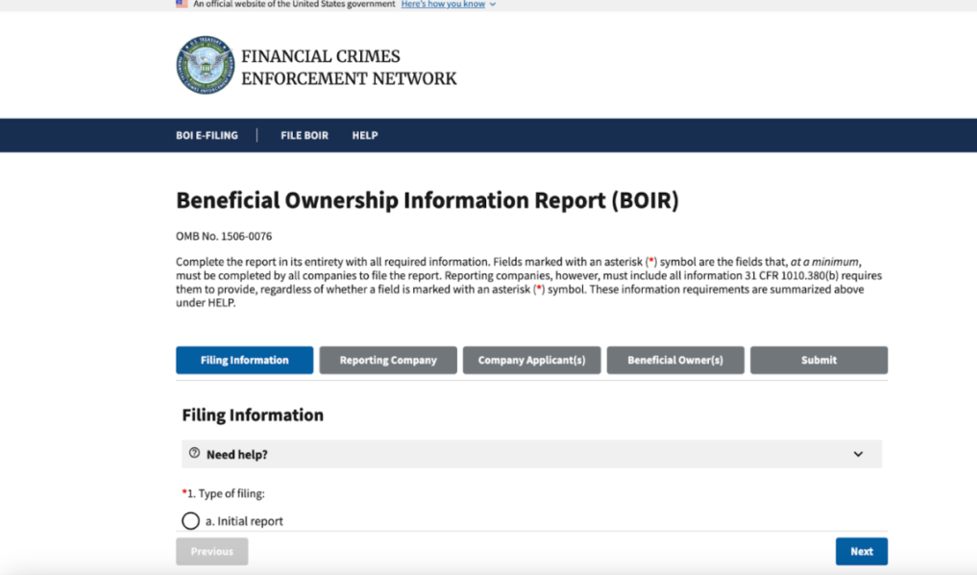
Reports of the BOI will now be done through the FinCEN BOI E-Filing System which will enable the submission of all required documents/photos through a secure online portal. Submissions via post will no longer be accepted.

Step 5: Track for Changes

After submission, businesses active must monitor for any pertinent changes and report modifications within 30 calendar days of any change in beneficial ownership, company information, or company applicant (if applicable).

BOI Filing Deadlines for 2025

Your submission deadlines timelines are determined based on when the entity is formed or registered:

  • Incorporated prior to January 1, 2024
    • → Deadline is no later than January 1, 2025
  • If incorporated in 2024
    • → Submission must be within 90 calendar days from date of incorporation or registration.
  • Incorporated on or after January 1, 2025
    • → Submission must be within 30 calendar days from date of incorporation or registration.

These timelines are highly sensitive and require close attention, especially for those businesses that have recently been incorporated or bound to incorporate in 2025.

Penalties for Not Filing BOI Report

Failing to comply with the BOI filing requirements is not a minor issue. The CTA establishes both civil and criminal penalties for non-compliance:

  • Civil Offenses: Set at $500 for every day the offense is not remedied.
  • Criminal Offenses: $10,000 fine plus up to two years in prison.

These penalties can be enforced from:

  • The willful misconduct of not submitting a BOI report.
  • Submitting fraudulent BOI reports.
  • Inaccurate BOI reports where the individual has failed to update or correct.

The legal trouble that can arise if accurate filings are not made is severe, hence care should be taken to fill out these details correctly and promptly.

How to File a BOI Report for a Limited Liability Company (LLC)

This is a step-by-step guidance for filing BOI report for Delphi Associates, LLC BOI report step by step for LLC owners.

1. Identify Your Beneficial Owners

Examine your ownership hierarchy and management-level personnel to identify potential beneficial owners.

2. Gather Required Information

For each beneficial owner, obtain identification documents and personal details including full name, date of birth, residential address, and a government-issued identification document.

3. Log in to the FinCEN Portal

Create a secure account on FinCEN’s BOI E-Filing System or select anonymous one-time filing option to access the system.

4. Input Company and Owner Details

Ensure that all information and scanned identification documents are uploaded and inputted accurately.

5. Review and Submit

Review report for any errors before submission through FinCEN’s BOI E-filing System. Confirmation receipt must be printed and saved.

6. Stay Compliant

File for any case rulings where updates are necessary, including but not limited to identification of ownership changes within thirty days, monitoring, and surveillance timelines.

If an agent or attorney organized your LLC, they might have to be included as the company applicant, especially for formations post-2023.

How Bizstartz Can Help File Your BOI Reports

At Bizstartz, filing with the Board of Investments (BOI) is made simple, seamless, and efficient, especially for international entrepreneurs and small business owners who may not be used to U.S. systems of compliance.

This is how we help.

Consultation and Assessment

We assist you in establishing who your beneficial owners are and if your firm qualifies for an exemption.

Document Preparation

We make certain that all necessary documents for BOI filing are obtained, verified, and securely managed in order to make the filing accurate.

Submission to FinCEN

For now, we will assume responsibility for the entire submission process through the e-filing system of FinCEN.

Ongoing Compliance Support

If you need to amend the report later, we can send you ongoing monitoring and update services.

All this, while partnering with us, ensures that you avoid expensive fines and achieve absolute compliance, giving you the freedom to concentrate more on growing your company.

Need assistance with BOI filing? Contact us or check our BOI Filing Services.

Blog CTA

Frequently Asked Questions (FAQs)

Do I have to submit a BOI report every year?

The BOI report is a one-off filing unless there is a change within the ownership structure, change in company or company information, or change in beneficial owners.

Is there a government fee to file the BOI report?

No. FinCEN does not charge any fee for submitting the BOI report.

What counts as substantial control?

Substantial control includes anyone with decision-making authority or influence over key aspects of the company’s operations, finances, or governance, even if they do not own shares.

Can a foreign individual be a beneficial owner?

Yes. Foreign individuals who own or control U.S. entities are required to be reported, regardless of their nationality or residence.

What if I forget to file my BOI report?

If you miss your deadline, you risk civil and criminal penalties. We recommend acting immediately and working with a professional to file as soon as possible.

Final Thoughts

BOI filing represents a major shift in how U.S. companies report ownership information to the federal government. As of 2025, millions of businesses will be required to comply with these new transparency laws, or face steep penalties.

If you don’t know your specific needs or how to undertake filing, working with a reputable provider like Bizstartz can simplify the process for you. Our professionals assist you in achieving the BOI filing requirements accurately and in a timely manner.

What is an LLC? How to Form an LLC?

Starting a business is always exciting, but can also be scary at the same time. Picking the right structure legal structure for your venture is one of the many steps to launching your business. For new business owners in the United States, creating a Limited Liability Company (LLC) is one of the most sought after options.

LLC’s offer personal liability protection and simultaneously allow flexibility to the members, which makes them suitable for various businesses.

In this detailed overview we will discuss everything there is to know about an LLC—its different types, uses, legal considerations, and the most efficient means of forming one.

Particularly, we will point out the ways Bizstartz can aid international founders in streamlining the bureaucratic processes.

What is an LLC?

An LLC, or limited liability company, is a legal form of a business entitled in all 50 states in America that provides personal liability protection for its owners (members).

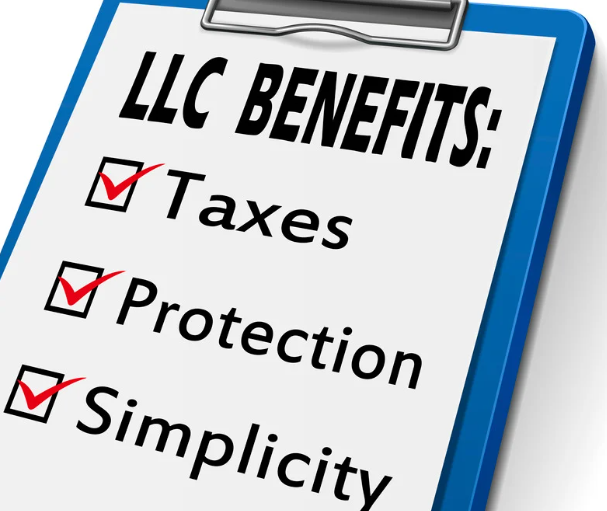
An LLC provides personal liability protection like a corporation while also being easy to manage and incredibly tax favorable like sole-proprietorships or partnerships.

Traditional corporations have far more rigid guidelines set regarding the operation of businesses; for instance corporations must hold numerous meetings within a year and issue stock. Moreover, LLC members aren’t bound to business debt or lawsuits.

LLCs are great for solo entrepreneurs, partnerships, real estate investors, eCommerce brands, and international founders looking to penetrate the US market.

Key Advantages:

  • Limited Personal Liability
  • Simple Setup and Maintenance
  • Pass-Through Taxation
  • Flexible Ownership and Management
  • Credibility with Banks and Clients

Types of Limited Liability Companies (LLCs)

When Setting up an LLC, it is advisable to pick one which best suits your intended purpose and level of governance, along with the laws of the country. Below is a detailed description of the different kinds of LLCs that exist in the US.

1. Single Member LLC

Just like the name suggests, a Single Member LLC is owned and operated by one person or entity. It has the same level of lawsuit protection multi-member LLCs offer, hence is a favourable option for independent contractors and self employed businessmen.

Main Characteristics:

  • Owned by a single individual or entity
  • No Double Taxation as income is paid at the time of personal filing
  • Minimalistic in setting up and governance
  • Not being personally liable in a court of law for the debts of the company

2. Multi-Member LLC

Allowable to (2) owners associates called members. A Multi Member LLC Is A business Mutually Owned Call By (One) or More Persons (Members.) A Multi-Member LLC caters two or more members. It however allows flexibility in the management and division of profits. This arrangement also allows for more creativity in the operating agreement, but requires more restriction to avoid abuse of shared ownership.

Main Features:

  • Owned by two or more members
  • Pass-through taxation (Every member reports their portion from individual tax returns)
  • Roles and responsibilities as well as profit sharing are defined in the operating agreement
  • Provides liability protection to all members

3. Member Managed LLC

In Member Managed LLC, all members participate in the operational aspects of the business. Most states have this as a default management structure and it is preferable for companies where the owners want to take part in the business.

Key Features:

  • Each member can make business decisions and has full authority.
  • Other members can make decisions on behalf of other members (collective or majority-based decision-making).
  • Good for small, mid-sized businesses and active owners.

4. Manager Managed LLC

In a Manager Managed LLC, the day-to-day activities are performed by one or more managers who are not members. This structure is often selected by members who wish to be only passive investors.

Key Features:

  • Management of the business is done by specific managers who may or may not be members.
  • Limited involvement for non-managing members.
  • Larger businesses or those with silent partners would benefit more.

5. Series LLC

A Series LLC enables one parent LLC to form several independent subdivisions (known as series) which have separate assets, liabilities, and members for each. This is suitable for businesses with several ventures or assets.

Key Features:

  • Multiple series under one legal entity
  • Each series has separate liability protection
  • Often used by real estate investors or businesses with diverse operations
  • Not available in all states

6. Professional LLC (PLLC)

A Professional Limited Liability Company (PLLC) is tailored for licensed professionals like medical doctors, lawyers, engineers, and certified public accountants. Certain jurisdictions impose a PLLC on some licensed professionals instead of a standard LLC.

Key Features:

  • Must be owned by licensed professionals
  • Provides liability protection for business debts but not for professional malpractice
  • Subject to additional state regulations and licensing board rules

7. L3C (Low-Profit Limited Liability Company)

The L3C is a hybrid business type. It merges the legal and tax flexibility of an LLC with a non-profit’s social purpose, catering to businesses that have a limited profit goal but prioritize social impact.

KEY FEATURES

  • Function for social or charitable purposes as the primary mission
  • Profits can be limited
  • Appeals to foundations and philanthropic investors
  • Only recognized by some states

What are LLCs used for?

Tax Benefits

Meaning “limited liability company” an LLC is extremely flexible and serves a wide variety of business purposed:

1. Initiating a Business

An LLC structure is beneficial for new eCommerce stores, mobile apps or consultancies, as it offers legal protection and tax advantages.

2. Real Estate Investments

Rental properties are often owned by real estate investors through LLCs as this protects personal assets from property-related liabilities and simplifies tax reporting.

3. Freelancers and Independent Contractors

LLCs can help asset protection and image projection for designers, developers, consultants and other professionals.

4. Online Operators

Digital businesses, including dropshipping, affiliate marketing or SaaS platforms, find LLCs especially useful due to the flexibility and protection offered during transactions with US clients.

5. Family owned businesses

Operating an LLC enables shared ownership and effortless transfer of interests among family members while sustaining operational flexibility.

6. Partnerships and Joint Ventures

Businesses or individuals who come together for a common goal can use an LLC to formalize the agreement, outline the roles of each party involved, and ensure protection of everyone’s interests.

 7. Foreign Ownership

LLCs suit foreign entrepreneurs looking to penetrate the U.S. market. An LLC can be owned by anyone, not necessarily a U.S. citizen or a resident.

LLC Legal Considerations

Although maintaining an LLC is less complex than a corporation, important legal considerations still apply:

1. Operating Agreement

Even if not required by your state, this document is critical. It sets the terms for the structure, roles, responsibilities, profits, division of disputes, and other pertinent elements. It serves to mitigate legal and operational ambiguities among members.

2. State Specific Regulations

Different states have unique requirements concerning naming, incorporation fees, title reporting, franchise taxation, and compliance. For example, the state of California has a minimum franchise tax of $800 while Wyoming does not impose a state income tax.

3. Registered Agent

Every LLC must designate a registered agent, a person or agency who resides in the state of registration. The agent’s responsibility is to receive legal correspondence on behalf of the business. Bizstartz serves as registered agent to all 50 states.

4. Separation of Finances

Blending private and business finances may enable “piercing the corporate veil,” exposing your private assets to certain liabilities. Always keep a business bank account, maintain accurate records, and bookkeeping.

5. Annual Filings and Reports

Every state seems to want their little piece of the action with regard to an annual or biannual report, and the collection of modest fees. Not complying with payments may incur penalties or even cancel the business registration.

6. BOI (Beneficial Ownership Information) Reporting

Beginning 2024, the Corporate Transparency Act requires BOI Reporting for most U.S. LLCs as the CTC must report to FinCEN detailing who controls or owns the company. Not submitting this will attract significant penalties.

How to Form an LLC: A Step-by-Step Guide

What is an LLC

Starting a Limited Liability Company (LLC) can be extremely beneficial for any entrepreneur seeking legal shielding, tax adaptability, and business standing. Thus, in the following paragraphs we will provide a relevant, step-by-step guide on how to form an LLC.

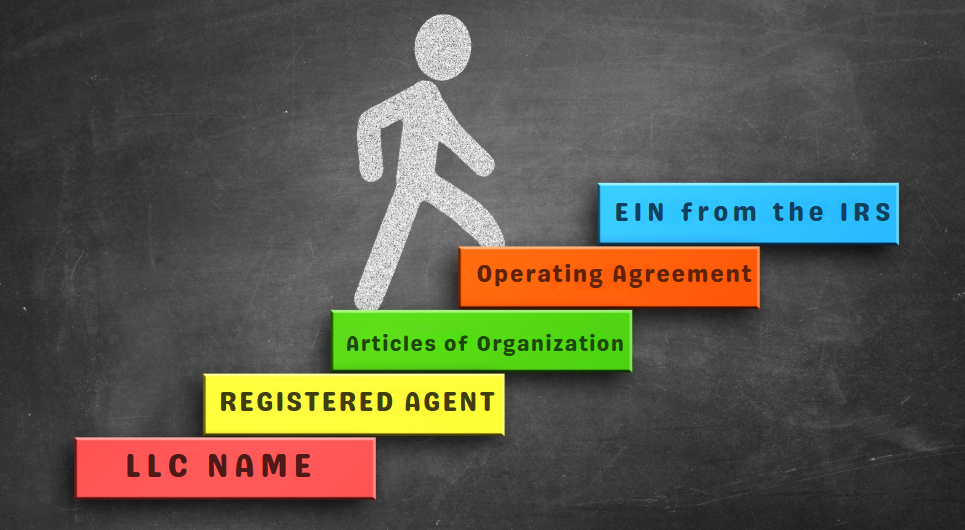
Step 1: Choose a Unique and Compliant LLC Name.

Your business name is its first impression and thus, the basis of your brand identity. Your name needs to be marketable and compliant legally.

✅ Tips for Choosing Your LLC Name:

  • Uniqueness: ensure that the name is not used in your states listing of registered businesses.
  • Compliance: The words “Limited Liability Company” or abridged as LLC or L.L.C should be mandatory inclusions.
  • Domain Availability: The corresponding website and social media page should not have been claimed by someone else.
  • Restricted Wording: Words like Bank, Insurance or Attorney should be avoided unless licensed.

🔍 How to Check Name Availability with The State’s Secretary:

Check for your states Secretary of State’s business search feature. Most states offer this for free.

Step 2: Appoint a registered agent

Each and every American state requires the appointment of a registered agent. A Registered Agent is any person or company responsible for receiving government and legal postal documents for your LLC.

✅ Registered Agent Options:

  • Individuals: You, a business colleague, or anyone within the states address.
  • Commercial Legal Service: A registered agent service will be beneficial in matters of privacy, reliability, and compliance.

Professional services also maintain completely accurate records, and your home address will never appear in public records.

Step 3: Submit the Articles of Organization

The document that formally establishes your LLC is referred to as the Articles of Organization (or Certificate of Formation).

General Information Needed:

  • Your LLC name
  • Business office address
  • Registered agent contact information
  • Duration (Usually perpetual unless indicated otherwise)
  • Management structure(member-managed or manager-managed)
  • Business purpose (general or specific.)

Papers need to be submitted to the Secretary of State or a similar governing body of the state. Most states allow electronic submissions.

Step 4: Prepare the Operating Agreement

An operating agreement isn’t compulsory under the law, but it is important for identifying and detail within which an LLC is splits, particularly in case of multiple owners.

🧾 What to Include:

  • Ownership structure and member contributions
  • Profit/loss allocation
  • Voting rights and decision-making rules
  • Member roles and responsibilities
  • Procedures for adding/removing members
  • Steps for dissolution or exit strategies

Single member LLCs still manage better operational efficiency and reinforced separation by having a distinct designated owner.

Step 5: Acquire an EIN from the IRS

An Employer Identification Number (EIN) serves as your LLC’s federal tax ID. It is necessary for opening a bank account, hiring staff, and filing taxes.

📝 Where to Apply for an EIN:

🌍 Non-US citizens may also use form SS-4 to receive it via mail or over the phone.

Step 6: Maintain Local, State & Federal Compliance

Your LLC faces a multitude of compliance ongoing legal activities.

📌 Business Licenses & Permits:

  • This could involve local business licenses, zoning permits, sales tax registration, or permits specific to the industry.
  • Permits vary by state, city and even county.

📋 Franchise Taxes and Annual Reports:

  • The majority of states require LLCs to pay franchise tax during the fiscal year and submit monthly or quarterly tax returns.
  • Failure to meet financial threshold may lead to bankruptcy or even be forced out of business.

💼 Taxes:

  • Default taxation: Single member LLCs (called sole proprietorship) or multi-member LLC (partnership).
  • Optional election: S-Corp or C-Corp for additional possible tax advantage (must submit Form 2553 or 8832 with the IRS).
  • It is important to speak to a CPA for optimizing tax arrangement.

Step 7: Set Up a Company Bank Account

Separating personal and business financial accounts helps protect your limited liability status while easing the accounting burden.

🏦 Necessary Documentation:

  • Confirmation Letter of the Employer Identification Number (EIN)
  • Articles of Organization
  • Operating Agreement, particularly for Multi-Member LLCs
  • Banking Resolution (if not included in the Operating Agreement, some banks might require this).

💡 Tips: Look for banks that work specifically with small businesses as well as those that have connections with QuickBooks or Xero.

How BizStartz Can Assist With Forming An LLC In The USA

BizStartz assists entrepreneurs globally in forming and operating LLCs completely remotely in the USA. So whether you are a digital nomad, freelancer or an international investor, we help you with compliance matters with ease.

Included Within These Services:

✅ Form An LLC In Any State

✅ EIN Application (SSN/ITIN Not Required)

✅ Registered Agent Services

✅ BOI Filing

✅ ITIN Application Services

✅ Open Business Bank Account (Remote Available)

✅ Annual Compliance & Bookkeeping

✅ Ongoing Business Support

What Makes Bizstartz Stand Out?

  • We handle the entire process from start to finish
  • Transparent pricing with no hidden fees
  • Fast turnaround, get your LLC in 24–48 hours
  • Multilingual support and international expertise

🎯 Get Started Today: Start Your LLC with Bizstartz

Final Thoughts

The LLC is an optimal and protective framework for businesses, regardless of scale. The popularity of LLCs in the United States is apparent due to their ease of setup, significant tax benefits, and robust liability protections offered with minimal bureaucracy.

Whether starting your business or restructuring one, an LLC is a smart starting decision, especially when working with professionals like Bizstartz that expedite compliance services.

Frequently Asked Questions (FAQs)

1. Are non citizens allowed to own an LLC in the United States?

Absolutely. A non-resident can completely own and operate a US based LLC. There are no requirements for citizenship or residency at any point.

2. Am I required to live in the U.S. or provide a physical address?

Not at all. You only require a registered agent in the specific state of your formation, which Bizstartz offers.

3. How long does it take to form an LLC?

In most cases, between 1 and 5 business days based on the state. Bizstartz does most of these within 24 to 48 hours.

4. Is it possible to get an EIN without an SSN or ITIN?

Absolutely. Bizstartz works with international clients in obtaining EINs even in cases where there is no SSN or ITIN provided.

5. What is BOI reporting, and is it mandatory?

Most LLCs created after January 1, 2024, will be subject to BOI (Beneficial Ownership Information) reporting. Bizstartz is able to do this filing so you can maintain compliance.

6. Which state is best for forming an LLC?

Your objectives will dictate this. If it’s for privacy or tax purposes, Delaware, Wyoming, and Nevada are the most popular. Bizstartz will assist in deciding which state is best for you.

7. What happens if I don’t maintain compliance?

Not filing the required reports or paying the necessary fees may bring along various consequences such as losing liability protection or your LLC being dissolved. As an example, compliance tracking and annual support are services provided by Bizstartz to keep you on track.

How to Form a US Company from Nepal (Step-by-Step Guide)

As a Nepalese entrepreneur, forming a company in the USA may seem like a far-fetched idea. The truth is, formed companies in the US are accessible to individuals from Nepal and other countries.

This allows access into various international markets, along with clients from all over the world. Powerful payment systems like Stripe, PayPal, and even Amazon can also be utilized.

Here’s the best part: Registration can be done completely online, eliminating the need to travel to the US or even reside there.

Through this article, I will guide you through the steps needed to legally register a company while in Nepal. This includes the requirements, benefits, and tools that will ensure the process runs smoothly.

Why Should You Form a US Company from Nepal?

The formation of a company in the US while residing in Nepal expands reach digitally. Offering the country strategic advantages, forming a US registered company provides various payment solutions, establishes a bank account within the US, improves business credibility, While enabling the Nepalese economy.

1. Global Business Reputation

The credibility registered US companies offer is invaluable. A US registration enhances the reputation and trustworthiness of the business, allowing for easier access to international clients and bigger deals.

2. Use of Payment Gateways

Connecting with payment processors like Stripe, PayPal, and Square is a challenge for most businesses in Nepal. These payment processors face local restrictions. Unlike them, US-registered companies have access to these services. Thus, payments from around the globe can be accepted without hassle.

3. Non-Residents Tax Benefits are Straight Forward

In most cases, non-resident business owners can operate a US LLC. The owners are not liable to pay corporate income tax as long as the company has no income derived from the US, which hits in the tax-free zone. Moreover, the owner can enjoy better tax treatment if profits are reinvested or retained in the company account.

4. Effortless to Start & Manage from a Distance

You can establish and manage a US company from any part of the world using digital platforms and remote services. All tasks from formation to compliance can be completed without setting foot in the United States.

5. Global Scaling is Just a Step Away

A US entity allows freelancers, sellers, service providers, SaaS business owners, and agencies to position their business for growth prospects, investment opportunities, and exposure on an international scale.

Step-by-Step: How to Form a US Company from Nepal

Form an LLC in USA

Let’s go over how to register a US company from Nepal without needing an address, citizenship, visa, or any other requirements:

Step 1: Pick Your Business Type

Your first task is deciding which business structure fits your aims. Here are the most popular:

🏷 LLC (Limited Liability Company)

  • This works best for freelancers, e-businesses, digital marketers, and even ecommerce platforms.
  • Provides liability protection and taxes on earnings at a single entity level, also referred to as pass-through taxation.
  • Less complex than corporations.
  • No shares need to be issued and a board of directors does not have to be appointed.

🏷 C-Corporation

  • Common among technology startups who plan on raising capital or issuing stock.
  • Double taxation applies (the entity incurs corporate tax and shareholders are taxed for dividends disbursed).
  • Venture capital and institutional investors prefer these.

Recommendation: The majority of founders from Nepal will greatly benefit from forming an LLC due to cost-efficiency, less operational complexity, and better overall tax structure.

Step 2: Choose Your State of Formation

Different states in the US have different business formation benefits, rules, and fees. If you are not physically performing business activities in a set state, there is little motivation to register your company in a specific state.

Here are the most popular choices:

🏞 Wyoming

  • No state income tax.
  • Extremely selective on privacy and asset security.
  • Around $60 every year in maintenance costs.
  • No need for a US address or an office.

🏛 Delaware

  • Tech startups and corporations commonly use this region.
  • Legalities are favorable to businesses.
  • This region has the highest ongoing costs compared to Wyoming.
  • Commonly used by companies intending to seek funding.

🌴 Florida or Texas

  • These areas are ideal for businesses selling tangible goods in the US.
  • Texas has a large local economy with no state income tax. Florida has no state sales tax.
  • If you operate within Texas, it becomes more difficult to comply with state sales tax regulations.

💡 For international, remote, and online businesses, an LLC from Wyoming balances the most in cost, ease of management, and regulations.

Step 3: Hire a Registered Agent

A registered agent is responsible for receiving any legal or governmental correspondence and other documents for your firm. They have to be located physically at the registered address of your firm.

What to look for:

  • Registered agent services catering to international business owners.
  • Provides a digital overview containing scanned documents.
  • Cheap options ($50-100 a year).

Since you cannot utilize your Nepali address, acquiring a registered agent becomes necessary.

Step 4: Submit Your Company Formation Documents

You have to now submit your business registration with the Secretary of State in the state of your preference. Said documents contain:

  • Organization Articles (for LLCs) or Incorporation Articles (for Corporations)
  • Company Denomination
  • Registered Agent information
  • Business Objectives
  • Member information (for LLCs) and/or Manager.

This step carries out the formation of your US company, which is usually created in 1–3 days if done through online submission.

A Certificate of Formation will be sent out once approved.

Step 5: Request an EIN (Employer Identification Number)

Your company registers an account which requires an EIN (Employer Identification Number) with the IRS, serving as a tax identification number.

The following requires you to have an EIN:

  • To open a US bank account
  • To apply for Stripe or PayPal
  • If filing taxes is needed
  • Optional; hire employees

As a non-resident, having to apply for an EIN will involve:

  • Completing the IRS Form SS-4
  • Sending it via fax or mail (this step can extend from 1–4 weeks)
  • OR employing a service provider to do it instead

Note: To save time and avoid waiting, let a professional handle the initializing filing; the EIN can take as little as 1–7 days to receive.

Step 6: Open A US Business Bank Account

With a United States business bank account, receiving payments in USD is easy, funds can be managed professionally, and financial platforms like Stripe, PayPal, and Wise can be utilized.

Options include:

🏦 Traditional Banks (Chase, Bank of America)

  • Requires US address and in-person visit (typically not suitable for non-residents).

💻 Online Business Banks (Fintech)

  • Mercury, Relay, Wise Business, Payoneer.
  • Designed specifically for international founders.
  • No travel to the US is required.
  • An uncomplicated application process involving presentation of company documents, EIN, and a passport is all that’s needed.

When the company is registered with a US business bank account, platforms and clients perceive the company as “real”.

Step 7: Apply For An ITIN (Not Required But Recommended)

A tax ID for foreigners without a SSN is the ITIN (Individual Taxpayer Identification Number).

Reasons why you might need an ITIN:

  • Personal US taxes need to be filed.
  • Payments from US businesses need to be received.
  • Tax treaty benefits need to be claimed.
  • Avoiding the 30% withholding tax on income sourced from the US.

Form W-7 when submitted alongside a certified copy of the passport is all you need. Some services aid with notarization and filing, especially for taxpayers outside the US.

Step 8: Comply with US Laws and Guidelines

It’s as important to maintain compliance as it is to form a business. Here’s something to keep an eye on:

🔁 Annual State Reports

Every territory requires companies to perform periodic compliance, also known as “annual report,” and pay a nominal fee in order to remain active.

  • Wyoming: = $60/year
  • Delaware: = $300/year

📝 BOI Report (Beneficial Ownership Information)

Beginning January 2024, FinCEN mandates all corporations to submit a BOI report detailing the ownership structure which has to be done 90 days after the company is registered.

💰 Tax Compliance Filings

You must submit returns to the IRS every year even if you do not owe tax. For a single member foreign-owned LLC, use Form 5472 and 1120.

🌐 Can I use a Service to form an US Company from Nepal?

Yes! There are lots of companies that help foreigners incorporate businesses in the US.

Services you should consider using include but are not limited to:

  • LLC or C-Corp formation
  • Registered Agent
  • EIN application
  • BOI filing
  • Business bank account assistance
  • ITIN application assistance
  • Proactive compliance services

👉 Bizstartz is among the many trusted service providers Nepali founders use to aid in the legal and affordable remote formation of US companies.

🤝 How Bizstartz Helps You Form a US LLC from Nepal

Nepali freelancers, startups, and entrepreneurs face numerous challenges setting up and registering an online company in the US. Bizstartz takes pride in offering customer-centric solutions. We guide our clients in each of the following stages:

✅ LLC Formation: we assist you in the registration of your company in Wyoming and Delaware including name check and filing articles of organization.

🧾 Registered Agent Service: We offer a virtual registered agent service complete with a real US address and native US citizens who will legally permit you to use their address.

🆔 EIN Application: Even in the absence of a social security number, we file for your EIN through the IRS.

💳 US Business Bank Account Support: we assist you in obtaining a US business bank account with companies like Mercury and Relay without setting foot in the US.

🏢 Business Address in the United States: Obtain a professional US address with digital mail scanning services.

📋 BOI Report Filing: We submit your Beneficial Ownership Information report to FinCEN as needed by US legislation (effective in 2024).

🧾 ITIN Assistance (Optional): Assistance If obtaining your Individual Taxpayer Identification Number is necessary for tax purposes or payment platforms, we help you file the application.

🔄 Annual Compliance: We issue reminders and assist with state renewals, IRS filings (1120 & 5472), and other necessary documents to keep your LLC in compliance.

💼 All-in-One Affordable Packages: For business founders in Nepal, we provide everything from business registration to ongoing compliance under one umbrella.

👉 With Bizstartz, you can set up a US LLC entirely online from Nepal and do it quickly, legally, and affordably.

✍️ Final Thoughts

Establishing a company in the US from Nepal isn’t only feasible; it has never been simpler. With adequate support, one can obtain a legally registered US LLC, an EIN, and even a US bank account within a matter of weeks.

This single action can help propel your business to new heights while simultaneously enhancing credibility and providing access to opportunities worldwide.

❓ Frequently Asked Questions (FAQs)

1. If I am not a US citizen or do not hold a visa, can I form a US company?

✅ Yes. You can form a US company without being a US citizen or holding a visa. Non-residents from Nepal can legally register an LLC or Corporation in the US without needing to set foot in the country.

2. Can a US bank account be opened without visiting the US in person?

✅ Yes. With Bizstartz, remote registration of a US business bank account is possible with Mercury, Relay, and Wise Business, which are geared towards international founders.

3. Am I liable to pay US taxes if I form a US LLC while residing in Nepal?

💡 It depends. If your LLC does not have income sourced from the US (such as US customers or a physical presence offices), and you are a non-resident, then you may not owe US income tax. Anytime reports and certain forms must still be submitted. Bizstartz assists with these obligations.

4. What is the processing time for forming a US LLC from Nepal?

🕒 Generally, the entire process takes:

  • 3–5 business days to set up the LLC.
  • 1–7 days to secure your EIN.
  • 1–2 weeks to acquire a US bank account.

Bizstartz aids in expediting the process by managing all necessary steps.

5. May I utilize my US LLC to apply for a Stripe or PayPal account?

✅ Definitely. A US LLC with a valid EIN and US bank account can easily open Stripe, PayPal, and other international payment accounts which are unavailable to Nepalese companies.